

Wands · X
Ten of Wands
carrying far too much
What it means
The Ten of Wands is the weight of too much. What began as a spark in the Ace has grown into a pile of responsibilities, and now you are carrying all of it. It speaks of burden, overcommitment and the kind of tiredness that comes from saying yes too often. The card is not a judgment, but an honest look at the load, and an invitation to ask what truly needs carrying.
The picture
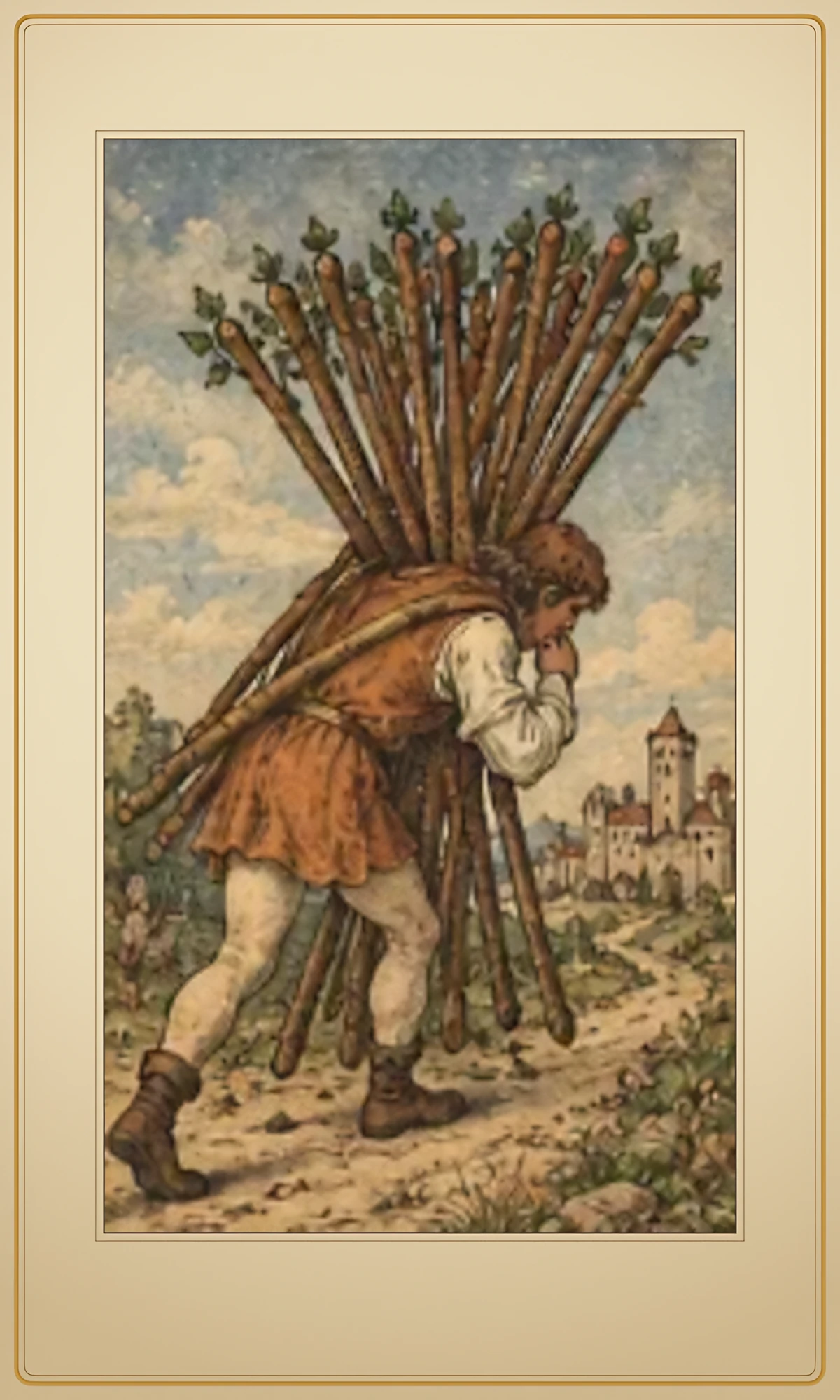
A man walks bent over along a dirt path, carrying a huge bundle of ten leafy wands in his arms and against his shoulder, his head lowered and his face almost hidden by the load, while a town with a tall stone tower waits ahead. He is nearly there, but he can barely see where he is going.
Upright
Upright, the Ten of Wands suggests you are carrying more than is sustainable: extra tasks, other people's problems, or expectations you have quietly accepted. You may be close to the finish, but the load is slowing you down and blocking your view. The card asks you to look at each piece honestly. Some of it is yours. Some of it could be shared, delegated or set down. Getting there is possible, but not if you collapse on the way.
Reversed
Reversed, the Ten of Wands often shows the moment you start to put things down: delegating, saying no, or admitting that it is simply too heavy. That is a healthy shift. It can also warn of burnout if you keep refusing to lighten the load. The card asks which of these burdens were never really yours to carry in the first place.
Love
In love, this card can reflect one person carrying too much of the relationship, or love starting to feel like another duty. If you are single, you may be too busy or tired to make room for someone. Ask yourself what support you need, and say it out loud.
Work
At work or in study, the Ten of Wands points to overload: too many tasks, too many roles or a stack of deadlines. It encourages prioritising, asking for help, and letting go of perfectionism on things that do not need it.
Money
Financially, this card can show heavy obligations, or carrying costs for other people. It suggests listing what you are responsible for, seeing what could be shared or reduced, and seeking qualified help if the weight feels unmanageable.
As a yes or no
No, or not yet, not while you are carrying this much.
A question to sit with
Which of the things you are carrying were never yours to carry?