How to Read Tarot Cards: A Beginner's Guide
Tarot looks like a mountain of rules until you notice it is really 78 pictures and a good question. This guide takes you from an unopened deck to a reading that makes sense, without asking you to memorize a single card.
What is actually in a tarot deck
A standard tarot deck has 78 cards in two groups. The 22 Major Arcana are the headline cards, numbered 0 to 21, from The Fool to The World. They tend to mark big themes: a turning point, a lesson, a chapter of life. The other 56 cards are the Minor Arcana, and they cover the everyday texture of things, such as what you are working on, who you are talking to and what keeps you awake at 2 a.m.
The Minor Arcana come in four suits, each with its own territory. Wands are energy, drive and ambition. Cups are feelings and relationships. Swords are thoughts, words and conflict. Pentacles are work, money, the body and the material world. Each suit runs from Ace to Ten and then adds four court cards: Page, Knight, Queen and King. Courts often describe a person, or a way of behaving that you could try on for a while.
That is the whole map: four suits, one set of big themes and a handful of court cards. Once you see the structure, a spread stops looking like a code and starts looking like a sentence.
You do not need to memorize 78 meanings
Nobody reads from memory on day one, and plenty of experienced readers still glance at a reference now and then. What you need at the start is a feel for each card, not a definition.
Try this. Look at the picture before you read anything about it. The Three of Swords shows a heart pierced by three blades under a rainy sky, and you do not need a book to guess it has something to do with heartache. The Six of Pentacles shows one person handing coins to others kneeling at their feet, which might mean generosity or might mean an uneven exchange. Start with what you see, then check the keyword to find out how close you were. After a few weeks the images become a vocabulary you did not have to cram.
If you want a quick reference, the card pages on this site give a short upright and reversed meaning for each of the 78 cards. Keep one open while you practice and treat it like a dictionary rather than a rulebook.
How to ask a question
The question does most of the work. A vague question gets a vague reading, and a clear one gives the cards something to answer. Good questions are open and about you: "What do I need to understand about this job offer?" or "What is getting in the way of finishing this project?" or "How can I approach the conversation with my sister?"
Questions to steer away from are the ones that ask the cards to settle a fact or predict a stranger's behavior, like "Will he text me?" or "Will I get the promotion?" Tarot cannot see the future or read minds. What it can do is show you how you feel about a situation and which options you may be overlooking. If you catch yourself asking a yes-or-no question, rephrase it with "what" or "how."
Write the question down, even as a note on your phone. It keeps the question from drifting while you shuffle, and later it lets you judge whether the reading answered what you actually asked.
Shuffle, cut and draw
There is no official ritual. Shuffle however feels natural, whether that is overhand, riffle, or spreading the cards across a table and swirling them around, until the deck feels mixed. Hold your question loosely in mind, the way you hold a thought while waiting for the kettle, not like an exam you must pass. Then draw from the top, or fan the deck and pick the cards that catch your eye.
For your first readings use one to three cards. One card makes a good daily prompt. Three cards give you a beginning, a middle and an end, which is the structure most people find easiest to read. Larger spreads can wait until three cards feel comfortable.
Some cards will land upside down. If that is confusing right now, turn every card upright and carry on. You lose nothing important while you are learning, and our guide to reversed cards is there when you are ready.
How to turn several cards into one story
The place beginners get stuck is the second card. Defining each card alone is easy; the reading lives in how the cards talk to each other. Here is a simple method.
First, scan the whole spread before reading any single card. Notice the mood. Are there lots of storms and swords, or suns and cups? Notice who is in the pictures, where they are looking and whether they are alone. Then read the cards in order and join them with small connecting words: because, but, so, until, even though.
Say you draw the Eight of Cups, the Four of Pentacles and The Star. In order: someone is walking away from something that no longer satisfies them (Eight of Cups), but they are gripping what feels safe (Four of Pentacles), so the hope that The Star offers will require loosening that grip. That is one sentence, it came from the pictures and not from memorization, and it sounds like something you could take away and think about.
What a good reading sounds like
A good reading does not announce what will happen. It gives you something to turn over and, ideally, one small thing to do. After you have told the story, ask three things. Which part made me flinch or sigh? What would I do differently if this were true? Is there one small step I could take this week?
Be gentle with the cards that look alarming. Death rarely means a literal death; it points to an ending and a clearing out. The Tower is disruption, not doom. No card is a verdict, and if a reading feels bleak, look at the cards around it and at the advice they offer, because most spreads include a way forward.
Treat tarot as a structured way to reflect. It is for entertainment and self-reflection, and it is not a substitute for professional advice on health, legal, money or safety matters.
Common beginner mistakes
The classic one is asking the same question again and again until the cards say what you hoped. If you dislike an answer, the interesting question is why. Another is reading too fast, so give each picture a few slow breaths. A third is treating the guidebook as the authority over your own response. If The Sun strikes you as glaring and exhausting rather than joyful, that is information about you, and it is allowed.
Keep a notebook. Write the date, the question, the cards and your one-sentence story. A month later, reread it. You will see which readings were useful and what patterns keep returning, which is where the real learning happens.
If you would like company while you learn, at TheMyths' Mystic's Table the crone talks you through each card as it turns, so you can watch how a reading gets put together before you try it yourself.
Cards in this guide
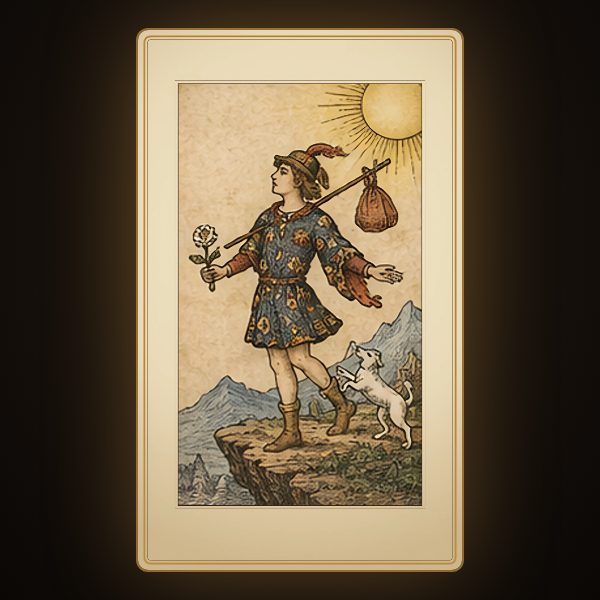
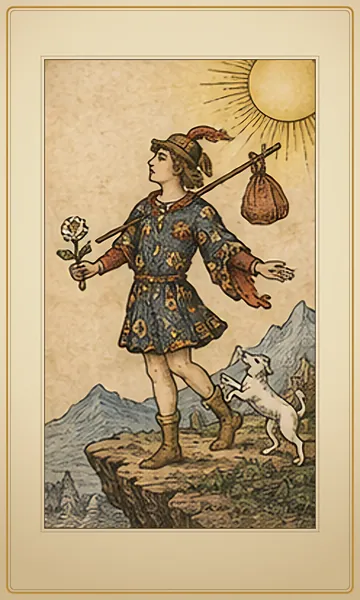 The Fool
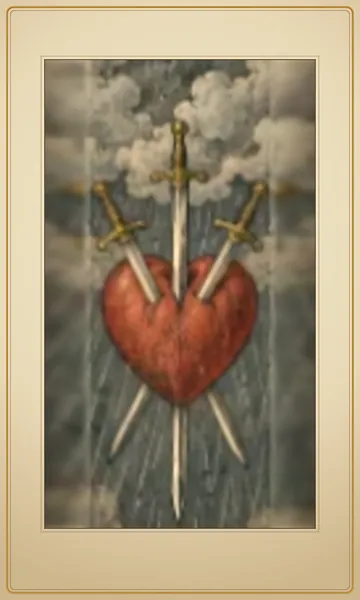 Three of Swords
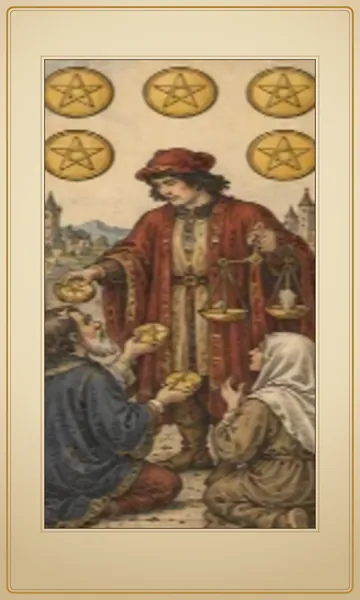 Six of Pentacles
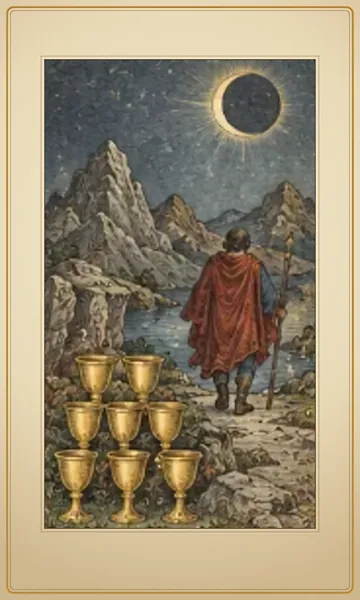 Eight of Cups
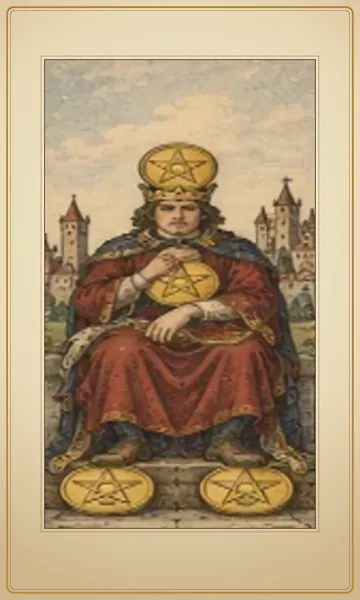 Four of Pentacles
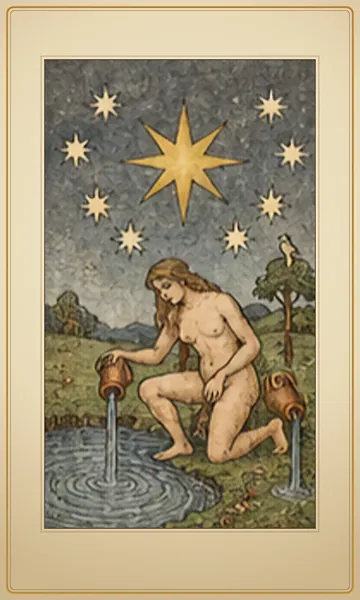 The Star
Questions people ask
Do I need to memorize all 78 tarot cards?
No. Most readers learn the cards gradually by reading with a reference nearby. Start with the pictures and a one-word keyword for each card, and your own associations will do the rest over time.
How many cards should a beginner draw?
One to three. A single card is great for a daily prompt, and three cards give you a simple story with a beginning, middle and end. Save larger spreads like the Celtic Cross for when three cards feel easy.
Can tarot predict the future?
There is no reliable evidence that it can, and a good reader will say so. Tarot works as a structured way to reflect on a situation and see options you may have missed. It is for entertainment and self-reflection.