Reversed Tarot Cards: Meanings and How to Read Them
A card turns up upside down and the reading seems to wobble. Reversed cards are one of the most argued-over parts of tarot, and the honest news is that there is no single correct method. Here are the main ideas, three ways of reading them, and a plain answer about whether you need them at all.
What a reversed card is
A reversed card is simply one that lands upside down when you draw it. Each of the 78 cards then has two possible orientations, which roughly doubles the number of ways a reading can go. Some readers love that. Others deliberately keep every card upright so the reading stays simple.
Reversals are not a rule of the original deck. They are a convention that readers added, and different traditions treat them differently. That is the first thing to know: nobody has authority to tell you that reversals are required, and nobody has authority to tell you they are wrong.
The second thing to know is that a reversed card is not automatically a bad card. Beginners often assume that upside down means the opposite or the worst version. In practice, reversals tend to be subtler: the same energy, but seen from a different angle.
Four ways a reversal can tilt the meaning
Most of what readers describe falls into four overlapping ideas. You do not have to choose one; use whichever fits the question.
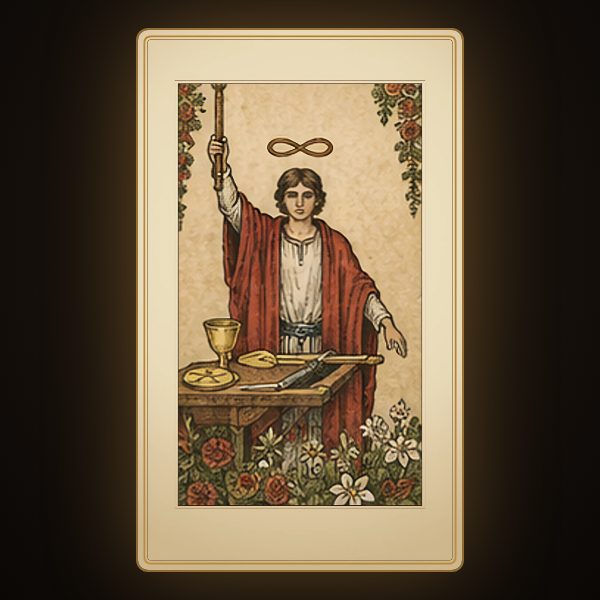
Blocked. The energy of the card is there but something is in the way. The Magician upright has every tool on the table and the will to use it. Reversed, the tools might be there but you cannot get started, or the focus is scattered.
Inward. The energy is not showing on the outside; it is happening inside you. The Queen of Cups is emotional generosity, upright. Reversed, the feelings may be turned inward, private or unspoken, perhaps even to yourself.
Delayed. The thing is on its way, just not yet. The Sun upright is clear, warm success. Reversed, it may describe a joy that is clouded for now, or one that needs more time than you wanted.
Excess. The energy is present in too great a dose, or has curdled. A card about generosity becomes self-sacrifice; a card about discipline becomes rigidity. This lens is especially useful for the court cards, which describe people.
Notice that none of these lenses flips the meaning into its opposite. They adjust the dial.
Three ways to read them
Method one: do not use them. Turn any upside-down card upright and read as normal. This is a perfectly respectable choice, and many professional readers do exactly this.
Method two: the dial. Read the reversed card as the same energy, then ask which direction it is turned: blocked, inward, delayed or excessive. Which one fits the question? This keeps the card's identity intact, so what you learned about the upright card is still useful.
Method three: the opposite. Read the reversed card as its flip. The Star, which is hope, becomes despair; The Tower, which is upheaval, becomes avoidance of upheaval. This is the most dramatic approach and works best if you already know the cards well, because the opposite is not always obvious. Some cards, like The Tower, are famously hard to flip, and a reversed Tower is often read as a disaster averted, or one you are holding off.
If you are undecided, try the dial. It is gentle, it builds on what you already know, and it lets the surrounding cards tell you which tilt applies.
Should beginners use reversed cards?
Start without them. You are already learning 78 meanings, a handful of suits and a way to link cards into a story, and doubling the possibilities at the start tends to make people feel that they are doing it wrong. A few weeks of upright-only practice will give you a much firmer base.
When you are ready, add reversals one at a time. A good first step is to keep a note of which cards come up reversed and to reread the upright meaning, then ask what an obstructed version of it would look like in your own life. You will usually find that you can guess.
There is no deadline for this. Some readers add reversals in their first month, others after a year, and some never do. The point of tarot is to think more clearly, not to complete a syllabus.
An example reading
Suppose the question is "Why can't I start writing the book I have been planning?" You draw a single card and it lands reversed: The Magician.
Upright, the Magician is skill, focus and a table full of tools. Reversed, using the dial method, the first lens to try is blocked: the tools are all there, the idea is there, and something is stopping the first move. The second lens is excess: perhaps there is too much preparing, with another outline, another notebook, and another research rabbit hole. The third is inward: perhaps you are doubting your skill privately.
Each lens becomes a question for you. Am I getting in my own way by gathering instead of beginning? Is there a belief I have not said out loud? What is the smallest piece of work I could do in twenty minutes? The card has not told you what will happen. It has pointed to where the energy is being held back and suggested a place to push.
That is the typical shape of a good reversed reading: not a verdict, but a more precise question.
Where reversals come from, and how to control them
In a casual shuffle, some cards end up rotated by chance. If you want reversals, overhand shuffle and let a few half-turns happen. If you would rather not have them, sort the deck so every card faces the same way after shuffling, or simply flip any upside-down card upright as you lay it down. Neither approach is more correct than the other.
Whatever you choose, be consistent within a reading and be honest about the limits. Tarot is for entertainment and self-reflection, and a card landing the other way up is not a sign from the universe. It is an extra prompt for your own thinking.
If you would like to hear a reversed card talked through rather than puzzled over alone, at TheMyths' Mystic's Table the crone will tell you which way she is leaning and why.
Cards in this guide
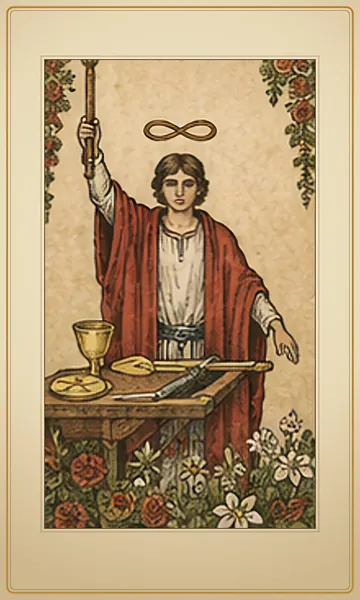 The Magician
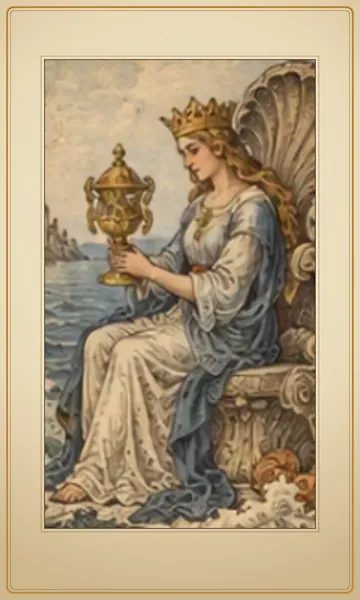 Queen of Cups
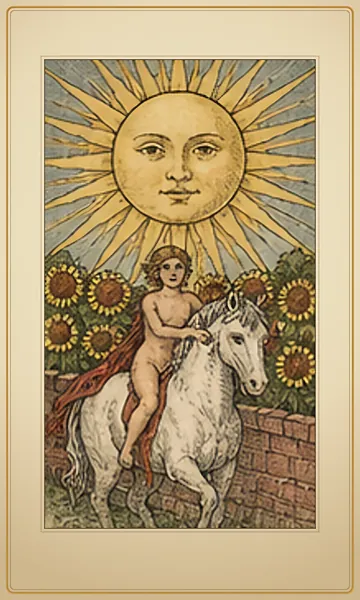 The Sun
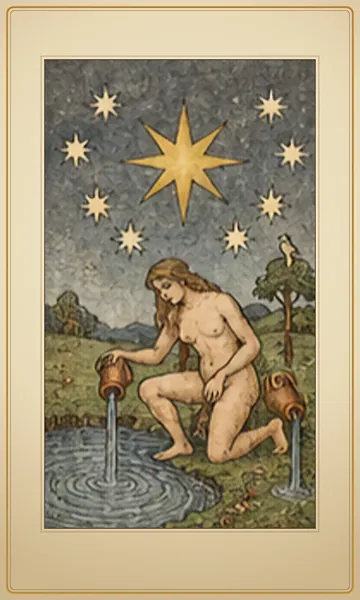 The Star
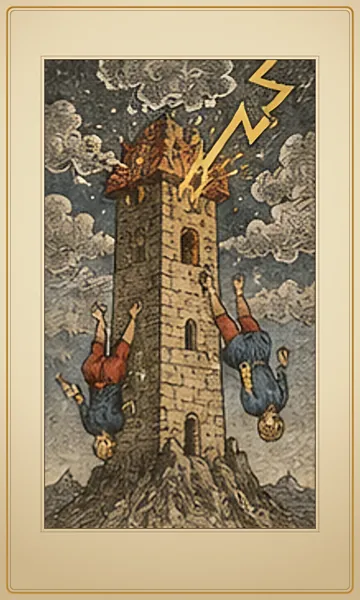 The Tower
Questions people ask
Do reversed tarot cards mean something bad?
Not necessarily. A reversed card usually shows the same energy in a different state, such as blocked, internal, delayed or overdone. It is a prompt to look closer, not a bad omen.
Is it okay to ignore reversed cards?
Yes. Many experienced readers turn every card upright and get excellent readings. If you are a beginner, upright-only is a sensible way to learn before adding another layer.
Do reversed cards always mean the opposite?
No. Reading the exact opposite is one method, but many readers prefer to treat a reversal as the same card with a twist, and use the surrounding cards to decide which twist applies.