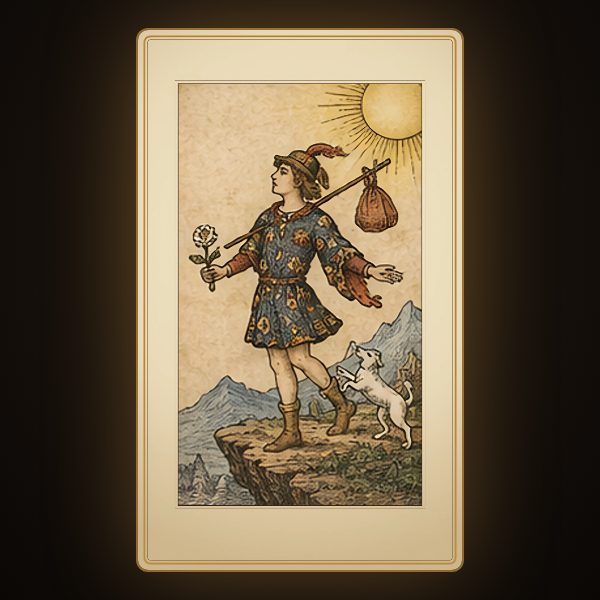


Daily Tarot Card Practice: A 7-Day Plan
One card, five minutes, once a day: it is the gentlest way to learn tarot and, for many people, a pleasant way to start the morning. This seven-day plan gives you a prompt for each day, a few journaling questions, and a simple review at the end.
Why one card a day works
Tarot is a visual language, and like any language it sticks through short, regular practice rather than long, occasional sessions. A single card each morning gives you a manageable amount to look at, and a whole day in which to notice how it relates to what actually happens.
That last part is the heart of it. When you draw a card in the morning and then check in with it in the evening, you start to build your own sense of what the cards mean, rather than borrowing someone else's. The Eight of Wands might be a day of fast emails. The Hermit might be a day when you want to turn your phone off. You are not predicting the day; you are giving yourself a lens to look through.
It also takes the pressure off. A one-card draw cannot be wrong or too long, and there is no need to build a story from several cards. It is an easy habit to keep, which matters more than anything else.
What you need
A deck, a notebook or a notes app, and five minutes. That is all. Pick a time when you are not rushed, such as with your coffee or before you check your phone. A consistent time helps the habit stick.
Decide on a simple ritual, if you like: shuffle for a few breaths, ask "What would be useful for me to notice today?" and draw one card. That question is deliberately open. It does not ask what will happen, only what to pay attention to.
If you would rather not use a physical deck, TheMyths has a free card of the day at /daily/, which gives you a card to work with each morning. The plan below works the same way with either.
Write down the date and the card before you read anything about it. Your first reaction is useful data.
Days one to three: learn to look
Day 1: just describe. Draw your card and write down five things you can see in the picture, as plainly as a police sketch: a person, a color, an object, a direction. Do not interpret anything yet. Then write one sentence about the mood. This trains the habit of looking before reading.
Day 2: one word. Draw a card and choose a single word for it, before you check any guidebook. Then read the card's standard keyword and compare. Where do they overlap? Where do they differ? Your word is as valid as the book's.
Day 3: the character. Draw a card and imagine the figure on it speaking to you. What would they say if they leaned out of the picture for a second? Write two or three lines in their voice. If you draw a card with no clear figure, such as the Three of Wands, imagine the person watching the ships from the cliff. This sounds whimsical, and it works because it gets you out of your head and into your own associations.
Days four to six: connect it to your life
Day 4: the body. Draw a card and notice where you feel it. A tight chest, a light stomach, a clenched jaw? Write down where and what the sensation is like. Then ask what part of your day that sensation might be about.
Day 5: the question the card asks. Every card can be turned into a question. The Fool asks "What would you do if you did not need to be sure?" Temperance asks "Where could you ease off, or blend two things?" Draw your card and write the question it seems to ask you. Choose one small action that answers it, such as sending that message, taking a lunch break or tidying one drawer, and do it.
Day 6: evening check-in. Draw your card in the morning as usual, but come back to it before bed. Write down what happened that day and whether the card fits. Be honest about the misses. Not every card will match your day, and that is useful information too. Some days you will see links you could not have predicted; other days you will see none, and that is fine.
Day seven: review the week
On the last day, draw a seventh card and then spread all seven entries in front of you. Read through your notes and ask: which card was my favorite, and why? Which one did I resist? Did any theme repeat, like a particular suit, a number, or a mood? Which of my journaling prompts gave me the most?
If a suit appeared several times, you may have a clue to where your attention was. Lots of Cups might mean feelings were front of mind, and lots of Pentacles might mean work and money. Lots of majors suggest a week with some weight in it.
Finish by writing one sentence beginning "This week the cards helped me notice..." That sentence is the real product of the exercise. It is your insight, not something the deck handed to you.
Making it a lasting habit
After the first week, you can keep the same simple routine or vary it. Some people draw on weekdays only. Some keep a running list of the cards they have met, with a personal keyword for each. Some read the same card out loud to a friend over breakfast.
Try not to judge a day by the card. A hard card is not a bad day waiting to happen, and an easy card is not a guarantee of one. The card is a prompt to pay attention, which is a useful thing to do whatever happens. As with all tarot, this is for entertainment and self-reflection, and you do not owe the cards your faith.
If you miss a day, simply start again the next morning. Streaks are for fitness apps. The goal here is to get to know the pictures well enough that they start to talk back.
Cards in this guide
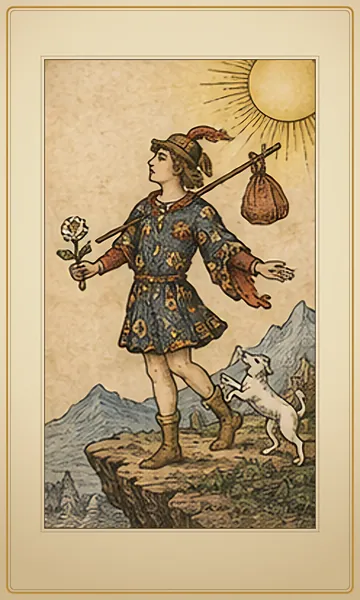 The Fool
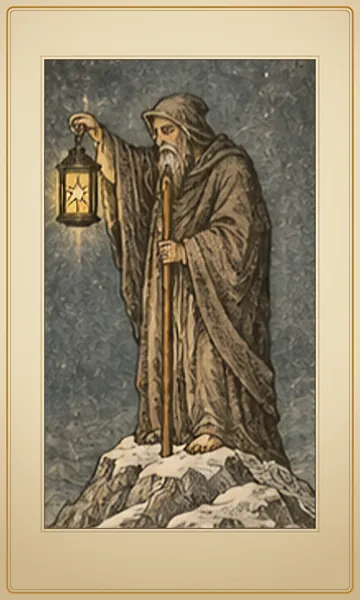 The Hermit
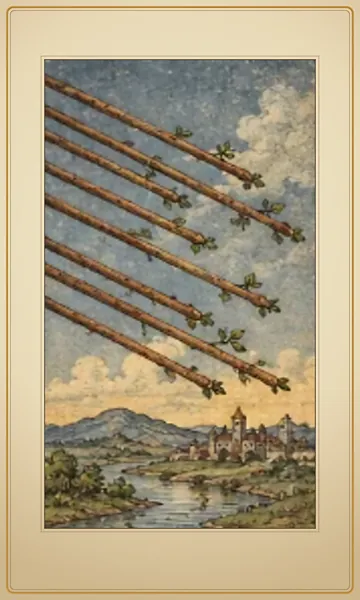 Eight of Wands
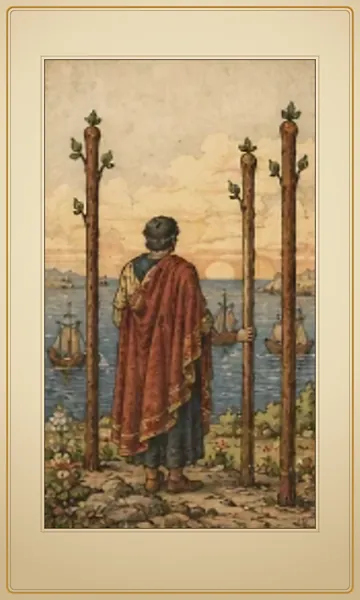 Three of Wands
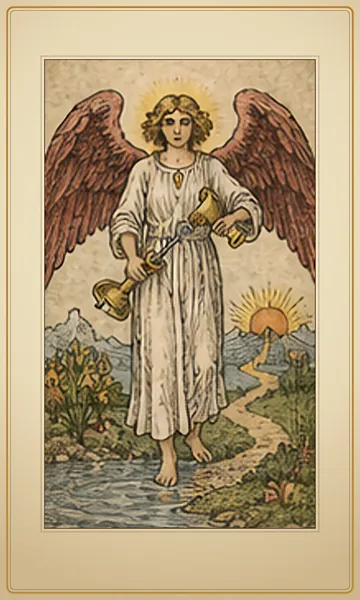 Temperance
Questions people ask
How do I start a daily tarot practice?
Draw one card each morning, write down what you see, and make a note of the date and the card. Keep it to five minutes. In the evening, glance back at the card and note whether it connected to your day.
Should I pull a card in the morning or at night?
Either works. Mornings suit setting an intention and noticing during the day, and evenings suit reflecting on how things went. Many people do both, drawing in the morning and reviewing at night.
What if I draw a card I do not like?
Describe it first, then ask what it might be inviting you to notice. A difficult card is often a prompt to look at something, not a prediction. If it stays uncomfortable, put it down and revisit it tomorrow.