
Tarot for Career and Money: Better Questions for Work Readings
Work is the topic where we most want a straight answer and the one where a deck of cards can least supply it. This guide shows how to turn an anxious work question into one tarot can actually help with, gives you a three-card spread for a job decision, and says plainly when it is time to put the cards down and go find out the facts.
Why work questions go wrong
Work is where the pressure sits. The rent is due, the interview went either well or badly, and the deck is right there on the table. So the first question tends to be “Will I get the job?” or “Will I get the raise?” or, on a bad night, “Is my manager about to let me go?”
These questions fail for the same reason. They ask about a decision made in someone else's head, on a day that has not happened yet, shaped by budgets, other candidates and moods you cannot see. No arrangement of cards knows any of that. If you draw the Six of Wands and decide the job is yours, you may spend a week planning a new commute. If you draw the Five of Pentacles and decide it is hopeless, you may skip an application that would have gone fine. In both cases the card was handed a job it cannot do, and you paid for it.
There is a quieter problem as well. Money and work are tangled up with fear, and when the stakes feel high we read cards hungrily, looking for the one sentence that lets us relax. That is exactly when we bend the pictures the most. Before you shuffle, take ten seconds to notice what you are hoping to hear. Naming the hope takes some of its grip off the reading.
Questions that give the cards something to do
The fix is to aim the question at what you can influence. Compare these pairs.
“Will I get the job?” becomes “How can I show up well in this interview, and what do I need to find out about the role?” “Should I quit?” becomes “What is draining me here, and what would I need from the next place?” “Will I ever earn more?” becomes “What is one habit around money, or around pricing my time, that I could change this month?” “Does my manager like me?” becomes “What do I need to understand about how I work with my manager?”
Each rewrite does the same three things. It is open, beginning with what or how. It is about your side of the table rather than someone else's mind. And it points at a window of weeks rather than a guarantee about years. A good work question usually has a verb in it that you control: prepare, ask, negotiate, learn, set, leave, stay.
If you are stuck, try a question about the pattern instead of the event: “What keeps happening to me at work that I might be contributing to?” It can sting, but it is the question that tends to produce a reading you remember.
A three-card spread for a job change
When you are deciding whether to move on, a simple three-card layout keeps the reading honest. Lay the cards left to right and name each position before you turn anything over.
Card one is what this job gives me. It asks what you would be keeping if you stayed: the skills, the people, the security, the part of the work you like. Card two is what it costs me. This is the price you are paying, in energy, time, pride or health. Card three is what to check before I decide. It is not a verdict; it points at the missing piece of information or the attitude to carry into the choice.
Here is an example. Someone weighing an offer from another company draws the Eight of Pentacles, the Ten of Wands and the Page of Swords. The Eight of Pentacles says the current job has given them real craft: they have been practicing for years and it shows. The Ten of Wands says the cost is overload, with too many tasks and too few people sharing them. The Page of Swords says the thing to do before deciding is ask questions. What will the workload really be at the new place? Who left the role before, and why? That is a reading with homework in it, and it also warns that the burden on the Ten of Wands could simply follow them across town if nobody asks.
Cards that often come up in work readings
Any card can speak about work, but a few families do most of the talking.
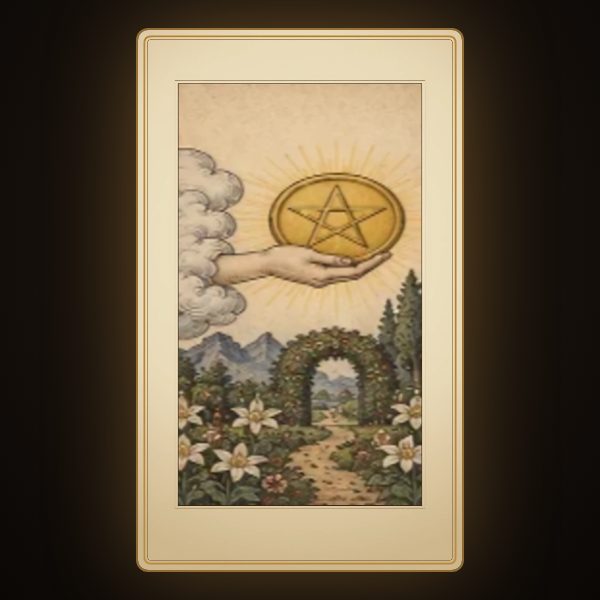
Pentacles are the suit of work, money and the body. The Ace of Pentacles is an opening: an offer, a course, a first paycheck. The Eight of Pentacles is skill built by repetition. The Three of Pentacles is collaboration, a team where each person's contribution is respected. The Four of Pentacles is holding tight to what you have, which can be sensible saving or fear of letting anything go. The Five of Pentacles is a hard season, and it always carries a lit window in the background, a reminder that help exists.
Wands bring ambition and friction. The Seven of Wands is defending your position when people push back. The Eight of Wands is things suddenly speeding up. Swords bring the thinking side: contracts, emails, difficult conversations, the three a.m. replay of a meeting. The Eight of Cups is the quiet knowledge that you have outgrown a place even though nothing is wrong on paper.
Court cards often turn up as roles. The Page of Pentacles is a trainee or a fresh start in a field. The Knight of Pentacles is the dependable colleague who finishes what they start. The King of Pentacles is someone who has built something steady and can be generous with it. The King of Swords is a boss who values rules, clarity and fairness. Treat these as qualities to notice, not as predictions about a particular person at your office.
When a card about money looks bad
You asked about your finances and the Five of Pentacles landed in the middle of the table. Or the Ten of Swords, or the Tower. Your stomach drops, and that is understandable. Before you panic, remember what these cards are doing.
A hard money card is almost never a forecast. It is a mirror for a feeling that is already in the room. The Five of Pentacles names worry about getting by and the loneliness that can come with it, and it points at the lit window behind the figures in the snow, which is help you have not asked for yet. The Four of Pentacles may be telling you that fear has turned saving into clutching. The Tower says a plan built on a weak assumption is under strain, which is useful to know before it falls.
Turn the card into a task you can do. Ask what the card wants you to look at, then pick one concrete step: open the bank app and list the fixed costs, ask a colleague what a fair rate is, book a call with a free debt or benefits advice service, or tell one trusted person that you are worried. Tarot can help you find the worry. The numbers and the next move live outside the deck.
Using the cards alongside facts
The most dependable way to use tarot for a work decision is as the last step, not the first. Do the practical thinking on paper: pay, hours, commute, people, learning, what you would regret not trying. Then use the cards to ask which of those columns you have been rushing past.
Suppose your list says the new job pays more, but you keep drawing the Eight of Cups when you ask about it. That does not mean you must leave, or stay. It is a cue to ask what you feel is missing in the present role that money will not repair. Or suppose you draw the Four of Pentacles whenever you consider a risky move. That is a question about security: how many months of cushion would let you take this chance without lying awake?
Write down the answer to that follow-up question before you close the notebook. A work reading has done its job when it leaves you with one sentence you did not have before and one thing to do about it this week.
When to stop reading and get real help
Stop pulling cards on the same question. If you have asked three times and keep getting an answer you dislike, the interesting question is why it matters so much, and that is a conversation for a friend, a mentor or a career counselor rather than a fourth shuffle.
Some situations are not tarot territory at all. If you are facing redundancy, a contract dispute, unpaid wages, a workplace injury or harassment, talk to the people who know the rules: an employment lawyer, a union or workers' rights organization, or a free advice service. If you are making choices about debt, investing or taxes, a qualified financial adviser can look at your actual numbers, which no spread can do. Tarot is for reflection and entertainment, and it is not a substitute for professional advice.
And if money or work worries are keeping you awake, making you hopeless or hard to be around, tell someone. A doctor, a counselor or a local helpline is a better first stop than any deck. The cards will still be there afterward.
Cards in this guide
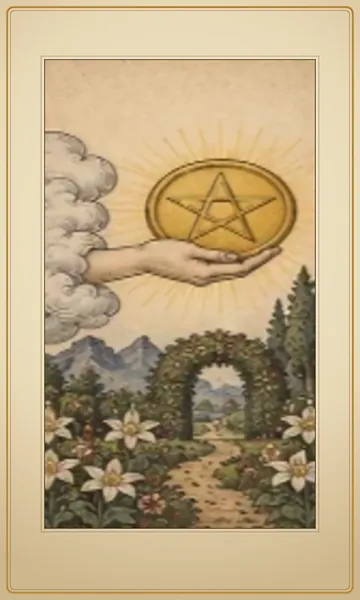 Ace of Pentacles
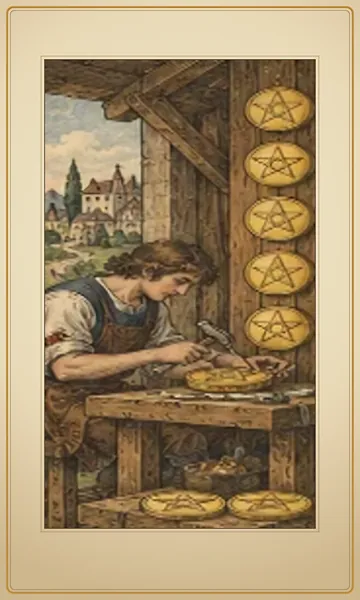 Eight of Pentacles
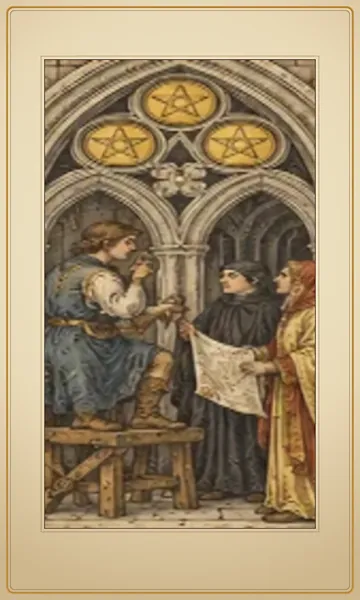 Three of Pentacles
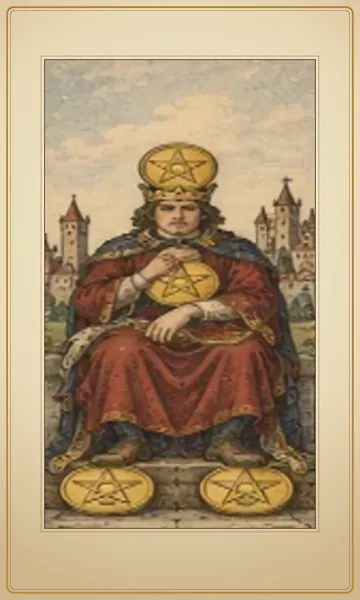 Four of Pentacles
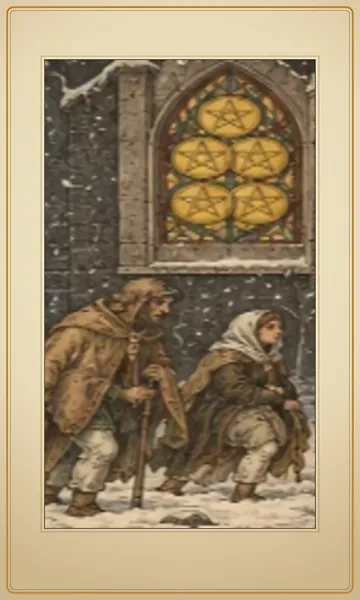 Five of Pentacles
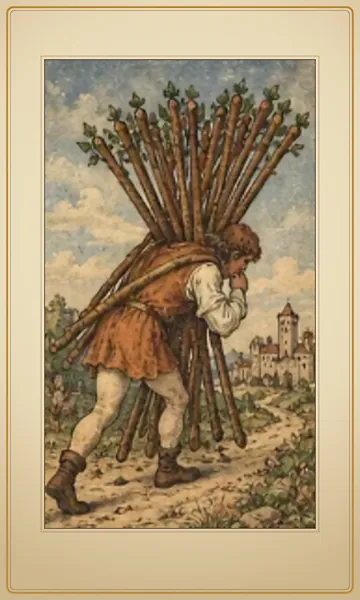 Ten of Wands
 Eight of Cups
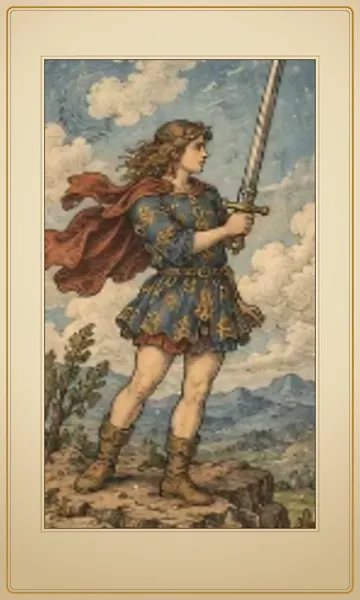 Page of Swords
Questions people ask
Can tarot tell me if I will get the job?
No. A hiring decision depends on other people and on information you do not have, and no card can see it. Tarot can help you prepare by showing how you feel about the role, what you want to ask, and where you tend to undersell or overpromise yourself.
Which tarot cards are about money?
The suit of Pentacles is the main money suit: the Ace of Pentacles for an opening, the Four for holding on, the Five for hard times and the Nine for self-earned comfort. Wands speak to ambition and drive, and Swords to the decisions and conversations around money. Any card can matter, because money touches every part of life.
Is it okay to use tarot for a financial decision like investing?
Use it only for reflecting on your own attitudes, such as what you fear or want, never to choose where money goes. Decisions about investing, loans or debt belong with a qualified financial professional who can see your real figures. Tarot is not financial advice.
What if I keep drawing the same worrying work card?
A repeating card usually means the question under the question has not been answered. Write down what the card makes you feel and what it might be asking you to change or check. If the worry remains, take it to a person, such as a mentor, counselor or adviser, rather than another round of draws.