The Major Arcana Explained: The Fool's Journey in Three Acts
The 22 Major Arcana can feel like a pile of unrelated pictures until you line them up in order and notice that they tell a single story: someone sets out unprepared, learns, is tested, loses what they leaned on and arrives somewhere larger. This guide walks through that story in three acts and names every card on the way.
Why read the Major Arcana as a story
The Major Arcana are the 22 numbered trump cards, from 0 for The Fool to XXI for The World. Because they come in a fixed order, readers have long treated them as a sequence, and the most popular way to read that sequence is as the Fool's journey: one figure traveling through all the cards, meeting each in turn.
It is worth being clear about what this is. The Fool's journey is a reading tool that later readers built around the cards, not a secret handed down with the original deck. It works because the order really does have an arc, and because most lives do too. Nobody walks it in a straight line, and nobody gets to skip a card. You can be in the Hermit's cave and the Chariot's rush in the same week.
Think of it as a map you hold loosely. It does not tell you where you are. It gives you something to compare against when a card turns up and you ask: is this an early lesson, a testing lesson or a breaking-open lesson? The three acts below sort the cards by that kind of question.
Act One, part one: The Fool to The Empress
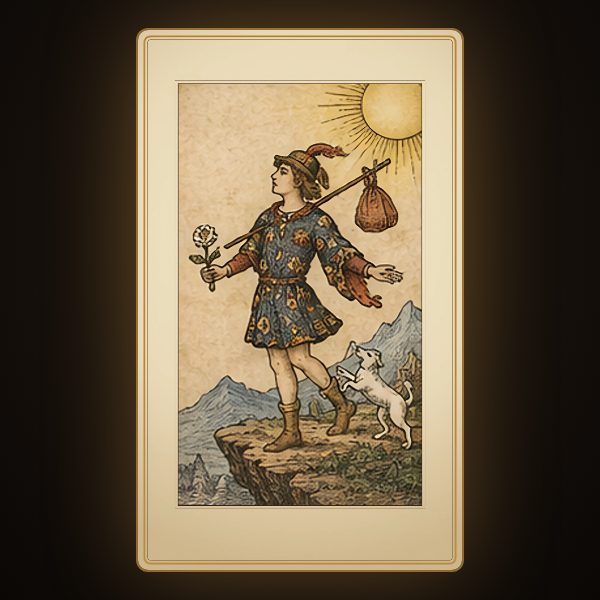
The first act, from 0 to VII, is about building a self. It begins with The Fool, the traveler at the cliff's edge with a bundle and a dog, who stands for curiosity before experience. Nothing is planned and everything is possible.
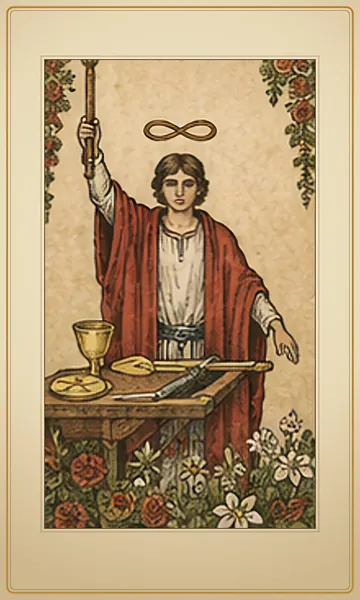
The Magician (I) is the first thing the traveler learns: that there are tools on the table and will can turn them into something. This is the card of focus and resourcefulness. The High Priestess (II) answers it with the opposite lesson, that not everything is done with effort. She sits between pillars with a half-covered scroll and asks you to listen, to trust a knowing that arrives before the explanation does.
The Empress (III) brings the body, the senses and growth. She is fertility, comfort, creativity and care, and the first card in which the traveler is nurtured and learns to nurture in return. Together these four cards give a young self its basic equipment: openness, skill, intuition and the capacity to grow things.
Act One, part two: The Emperor to The Chariot
With the equipment gathered, the traveler needs a frame. The Emperor (IV) supplies it: structure, boundaries, leadership, the discipline to build something that stands. He is the first adult rule-maker, and also the first card that can turn rigid.
The Hierophant (V) is the teacher and the tradition. Here the traveler learns that others have walked this road, that institutions and mentors hold real knowledge, and that belonging to a shared way of believing can steady you. In later acts the traveler will question this, but not yet.
The Lovers (VI) is the first big choice. It is less about romance than about values: what do I commit to, and does my action match what I say? Then The Chariot (VII) pulls the lessons together in motion. Two sphinxes, one black and one white, pull in different directions, and the driver steers them by will rather than reins. The first act ends with a self that can pick a direction and hold it. It is a good place to arrive, and it is not the end. Strength comes next, because willpower alone has limits.
Act Two, part one: Strength to Justice
The second act, from VIII to XIV, is about testing and integrating. Everything the traveler built is now asked what it is made of.
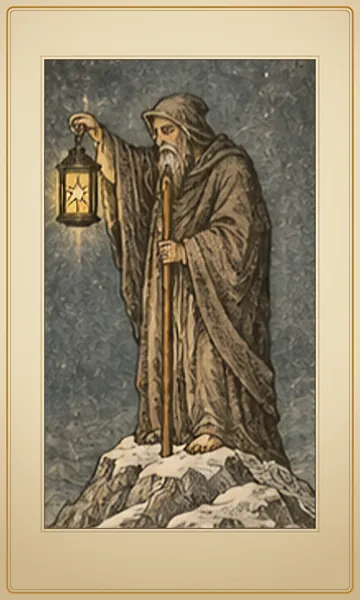
Strength (VIII) is the first test, and it is a surprise: instead of fighting the lion, the woman gently closes its mouth. Courage turns out to be gentle persistence rather than force. The Hermit (IX) follows, stepping away from the crowd with a lantern. After the Chariot's rush, the traveler stops to ask what it was all for and finds that the answer has to be worked out alone.
The Wheel of Fortune (X) breaks the illusion of control. Fortunes rise and fall, and no amount of will changes the fact of cycles. It is the card of turning points and of learning to live with luck. Then Justice (XI) steps in to say that actions have consequences. What you set moving comes back, and the scales do not care how you meant it. These four cards are not punishments, only reality checks.
Act Two, part two: The Hanged Man to Temperance
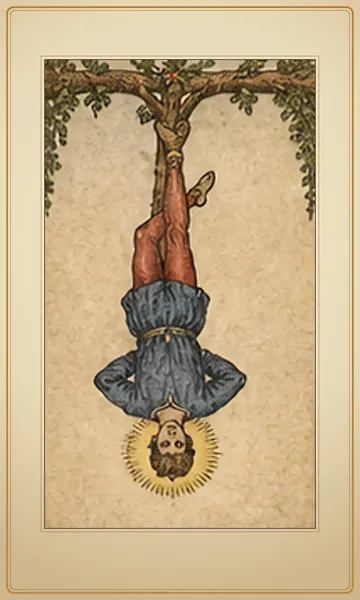
Having met the world's limits, the traveler is asked to loosen the grip. The Hanged Man (XII) hangs calmly from a tree, upside down, with a halo. This is deliberate surrender: stop pushing, look from another angle and allow something to change without force. Many readers find this the most underestimated card in the deck.
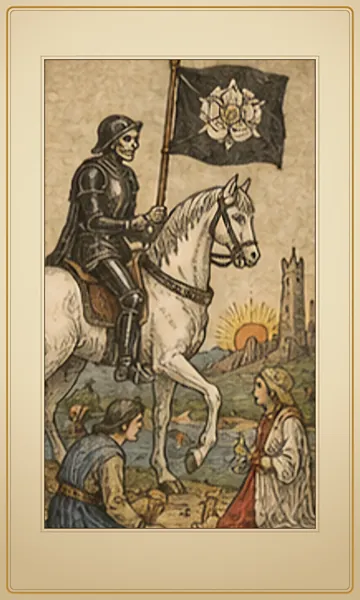
Death (XIII) is next, and it is almost never literal. It is the clearing out of what is finished. A chapter, a role, a belief or a relationship ends, and the card insists that the ending is real before anything new can grow. The traveler cannot go forward carrying everything.
Temperance (XIV) is the integration that follows. An angel pours water from one cup into another, mixing opposites into something steady. After surrender and loss, this is the patient work of blending: effort with rest, feeling with thought, past with future. It closes the second act with a calmer, more balanced person than the one who set out. And that is just when the story turns.
Act Three, part one: The Devil to The Star
The third act, from XV to XXI, is about breaking open, renewal and completion. It begins with a shadow. The Devil (XV) shows two figures with loose chains around their necks: attachments, compulsions and bargains we think we cannot refuse. After the calm of Temperance, the traveler has to look at what still has a hold on them, and notice that the chains are looser than they appear.
The Tower (XVI) follows, and it is the great collapse. Lightning strikes the structure and its occupants fall. Often what comes down is something built on a false assumption, and the shock clears space that nothing else would have cleared. It is rarely comfortable and rarely wasted.
The Star (XVII) is the exhale after the storm. A figure kneels at a pool, pouring water onto land and into the pool, under a sky of stars. Nothing grand has happened; there is only honest hope, rest and healing. If the Tower is the break, the Star is the first night you sleep again.
Act Three, part two: The Moon to The World
Renewal is not yet completion, and the final four cards are the last stretch. The Moon (XVIII) is the dark path, where dogs howl and a crayfish crawls out of the water. It is the realm of fear, dreams and uncertainty, a reminder that part of the road is walked without a clear view, trusting instinct.
The Sun (XIX) breaks over it. A child rides a white horse beneath a huge sun, in a card of plain joy, clarity and vitality. There is nothing left to hide, and the traveler is allowed to enjoy it.
Judgement (XX) is the call. Figures rise from their graves at a trumpet's sound, which readers take as awakening and reckoning: looking back honestly at the whole road and answering who you have become. Finally, The World (XXI) shows a dancer inside a wreath, at the center of everything, complete. The cycle is fulfilled, and the freedom that comes with it is the point. In the tradition of the Fool's journey, completion leads straight back to The Fool. Each ending is the start of a bigger version of the same trip.
Using the journey in a reading
The story is most helpful when you use it as a question rather than a ruler. When a Major Arcana card appears, ask what part of the journey it belongs to and what that suggests about the question. A Hermit says you are in a stretch of reflection. The Tower in the same spread says that something is already coming apart and the Hermit's quiet might be needed to cope with it.
Pay attention when several Majors appear together, especially in sequence. A run like Death, Temperance and the Star is not a prediction, but it makes a coherent sentence: something ends, there is a period of careful rebalancing, and hope follows. Mostly minors with one lonely Major suggests the Major is a theme for a day-to-day matter.
Do not use the order to rank yourself. Having drawn the Devil does not mean you are behind the person who drew the Sun. Everyone passes through every card, usually many times, and the journey is a circle rather than a ladder.
Cards in this guide
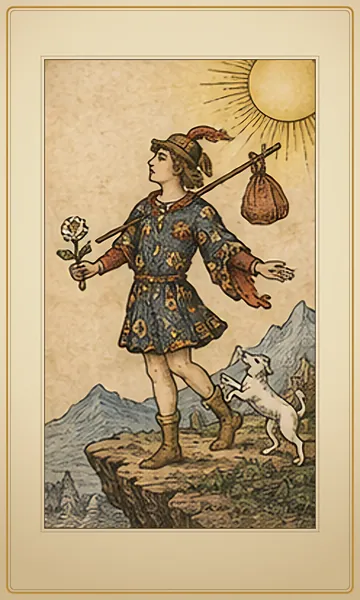 The Fool
 The Magician
 The Hermit
 The Hanged Man
 Death
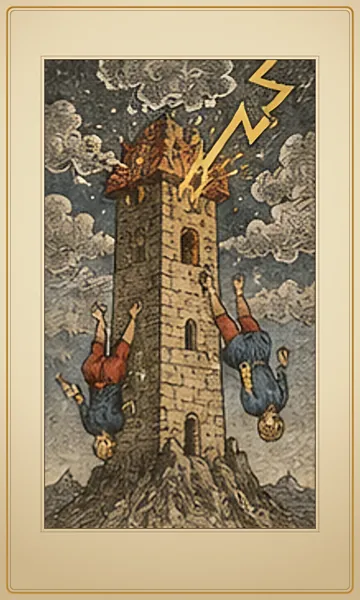 The Tower
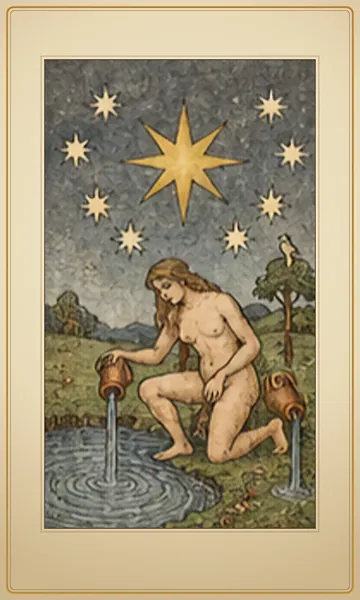 The Star
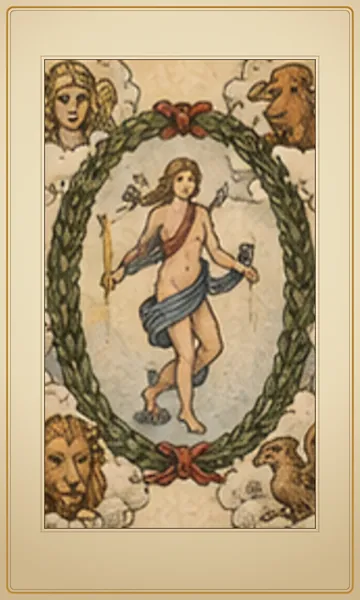 The World
Questions people ask
What is the Fool's journey in tarot?
It is a way of reading the 22 Major Arcana as one story in which The Fool travels through each card in order, from innocent beginning to completion at The World. It is a reading tool built by later tarot readers rather than an ancient rule, but the order of the cards supports it.
What are the three acts of the Major Arcana?
A common division is cards 0 to VII (building a self), VIII to XIV (testing and integrating) and XV to XXI (breaking open, renewal and completion). The grouping is a guide for thinking, so you may see other readers split the cards differently.
Do I have to read the Major Arcana in order?
No. In a reading the cards turn up in any order, and the journey is just a background map. It helps you ask where a card sits in a bigger arc, but your question and the surrounding cards decide what it means.
Does drawing a late Major Arcana card, like The World, mean I am advanced?
No. The numbers mark places in the story, not levels of achievement. The World can mean that a cycle in your life is closing, and The Fool can show up in someone who has done it all before. Both are part of the same circle.