Tarot Court Cards Explained: Pages, Knights, Queens and Kings
Court cards are the part of the deck that trips up almost everyone. They look like portraits, so we ask who they are, and then the reading goes sideways. This guide gives you three reliable ways to read them, a portrait of how each rank behaves in every suit and a few checks for telling a person from a message.
Why court cards are slippery
The 16 court cards are the Page, Knight, Queen and King of each suit. Unlike the numbered cards, which usually describe a situation, courts show someone doing something. That sounds easy, and it is the trap. The moment a King of Cups lands in a reading about your family, it is tempting to decide that this is your father, or your uncle, or the man who keeps phoning.
Sometimes a court card does describe a real person. More often it describes a way of acting that is present in the situation, and occasionally the way of acting is yours. Because the same card can do all of these things, the reading depends on a choice that the beginner never notices making: what kind of thing is this card telling me about?
The solution is not to memorize a lot of personality profiles. It is to learn the pattern of the ranks and the suits, then decide on purpose which of the three lenses below you are using.
Three ways to read a court card
As a person in your life. This is the classic reading. The card describes someone around the question, and the suit and rank give a rough sketch of their style: warm and emotional, quick and verbal, steady and practical, driven and restless. Use it as a sketch to hold up against reality, never as an identification. The test is whether the description lights up recognition or needs bending to fit.
As a part of yourself. The card describes a side of you that the situation calls for or that is currently running the show. A Knight of Swords may be the part of you that wants to fire off the email right now. The Queen of Pentacles may be the part that would quietly sort out a budget and a good dinner. This lens is the most useful for self-reflection, since you are the one person you can ask.
As a mood or approach. The card describes the way to go about the matter, with no particular person involved. Approach this like a Page of Wands, with curiosity and a few experiments. Approach it like a King of Swords, with facts and a clear decision. This lens is the easiest on beginners because it asks only: what manner would help?
The Pages: students and messengers
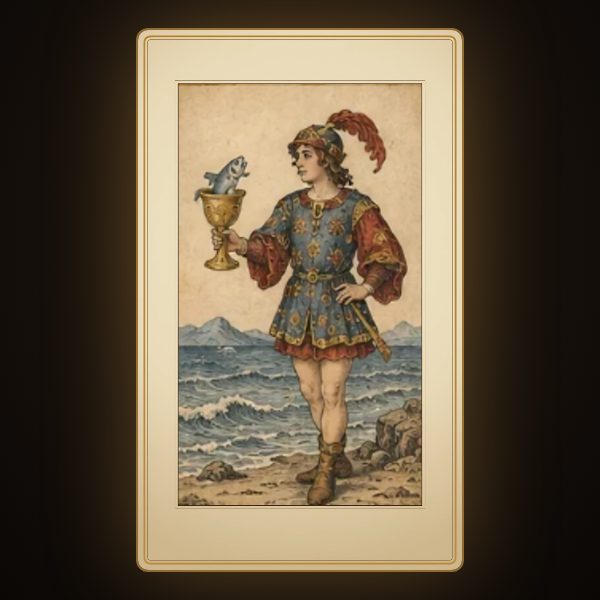
Pages are the beginners of each suit. They are young in experience, not necessarily in age, and they carry curiosity and news. A Page can be a person who is learning, a message arriving, or a part of you that is new to something and willing to try.
The Page of Wands is a spark of excitement about a new interest. The Page of Cups is a tender surprise, an invitation or an imaginative nudge. The Page of Swords is a watchful, questioning mind that notices what others miss. The Page of Pentacles is the careful student who starts small with a course, a budget or a routine.
When a Page appears, ask what you are being invited to learn, and what small, low-risk test you could try. Pages rarely demand a big commitment. They suggest that the right approach is to explore it with humility, which is a relief if you have been pressuring yourself to already know.
The Knights: movement and its risks
Knights carry their suit into action, and each does so with a single-mindedness that is both their strength and their flaw. They are the cards of momentum, pursuit and pursuit's side effects. A Knight can describe a person who arrives and acts, a development moving quickly, or an urge in you to move.
The Knight of Wands charges ahead with passion and not much of a map. The Knight of Cups arrives with an offer from the heart, romantic and sincere, though the follow-through is a separate question. The Knight of Swords rides at full gallop with an idea, fast and focused and sometimes careless of whom he rides through. The Knight of Pentacles plods, which is exactly why he finishes things.
The question to ask a Knight is where the horse is going and whether the rider has looked at the road. Knights ask for either speed or steadiness, and the suit tells you which. They can also be the hardest courts to read, because the same fixation that makes them effective makes them one-sided.
The Queens: mastery turned inward
Queens are suits expressed from the inside. Where Knights act, Queens embody. They are mature and self-possessed, and they tend to describe how a quality is lived day to day, not how it is displayed on a stage.
The Queen of Wands is warm, magnetic, confident in her own worth. The Queen of Cups feels deeply and still sees clearly, with compassion that is not merely sympathy. The Queen of Swords sits with an upright blade and an open hand, honest and direct about her boundaries. The Queen of Pentacles shows care through the practical, a meal, a sensible budget, a home that feels safe.
As a part of yourself, a Queen often marks the point where a quality has matured into confidence and no longer needs to prove itself. As a person, she tends to be someone who holds a space. Read gently, because Queens in their shadow sides can be possessive, withholding or cold, and the reversed cards are where those shadows live.
The Kings: authority and responsibility
Kings are the suits as leaders. They have mastered the energy and now take responsibility for how it affects others, which is why they often show up in questions about decisions, direction or boundaries.
The King of Wands leads with vision and presence, someone who can inspire a team and take risks on purpose. The King of Cups stays steady in emotional storms, giving measured advice and keeping his own feelings in good order. The King of Swords is the clear head with principles, fair, analytical and willing to decide. The King of Pentacles is the builder who has succeeded and uses his stability to support others.
When a King appears, ask where authority sits in the question, and whether it is being used well. It might be someone with power over your situation, or it may be your own invitation to take charge. Their shadows are control, rigidity and the habit of mistaking power for wisdom.
How the suits change the ranks
A quick way to keep the 16 straight is to remember that each suit has a temperament, and each rank is a stage of maturity in that temperament. Wands are fiery, so the courts are enthusiastic, bold and restless. Cups are watery, so the courts are feeling, intuitive and relational. Swords are airy, so the courts are verbal, quick and principled. Pentacles are earthy, so the courts are patient, practical and reliable.
Cross that with the ranks and you get a grid with which you can guess any court. The Knight of Cups is a Knight, so he moves, and a Cups figure, so he moves toward feeling. The Queen of Swords is a Queen, so she embodies, and a Swords figure, so she embodies clear thought. If you forget the exact keywords, you can rebuild them in a few seconds.
A person or a message? Three checks
If you are unsure how to read a court card, try these checks. First, look at the question. If it is about a relationship with a specific person, the court card is more likely to be a sketch of someone or a part of you in that relationship. If it is about a decision or a project, it is more likely to be an approach.
Second, look at the neighbors. A court card beside several cards about home and family may be a family member. Beside cards about a task, it may be the manner in which the task should be done.
Third, ask whether the description helps if it is not a person. “What would it look like to treat this like a Queen of Swords?” If that question produces a useful answer, the approach lens is working. Pages in particular are very often messages, so a Page next to a question about news can be read literally as a message arriving.
Common mistakes with court cards
Assuming gender. Queens and Kings are traditionally pictured as women and men, but the energy belongs to anyone. A King of Pentacles may be a woman managing a business, and a Queen of Cups may be a man who is gifted at listening. Read the qualities, not the body.
Assuming age. A Page is a beginner, not necessarily a child. Someone in their sixties starting to paint is a Page of Wands. Knights are not always young men either.
Assuming a specific person. If you think the card is your friend, test it by asking what else it could be. Most mistakes come from falling in love with the first identification and ignoring the card's other jobs.
Treating the card as fate. A court card shows a style, and the style can be chosen, changed or declined. If the Knight of Swords describes your manager, that is information for you to work with, not a ruling on how they will behave.
Cards in this guide
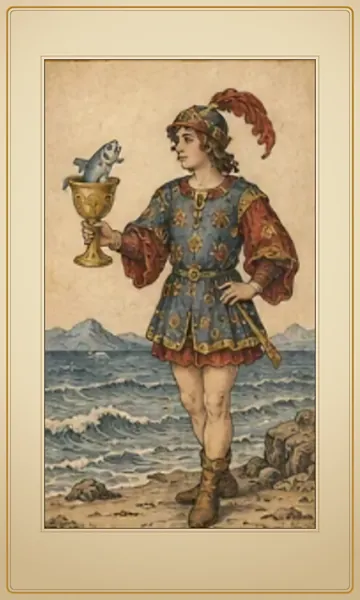 Page of Cupsa tender surprise
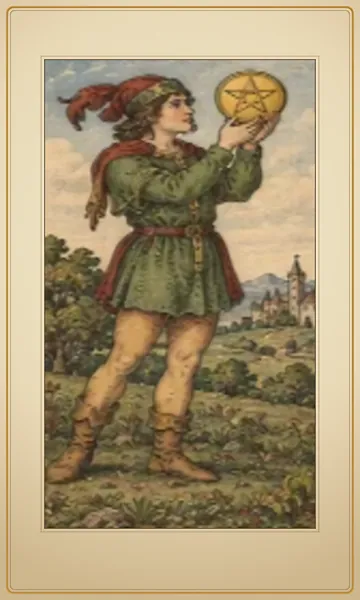 Page of Pentaclesa student's first plan
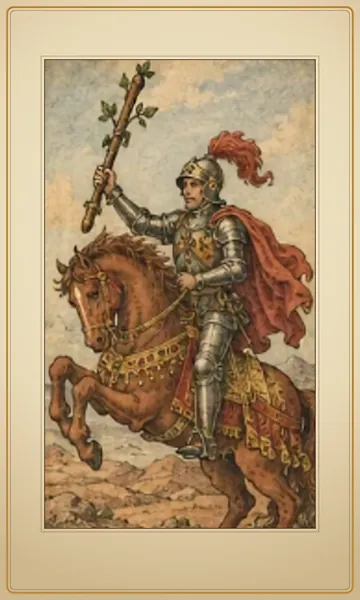 Knight of Wandsa charge without a map
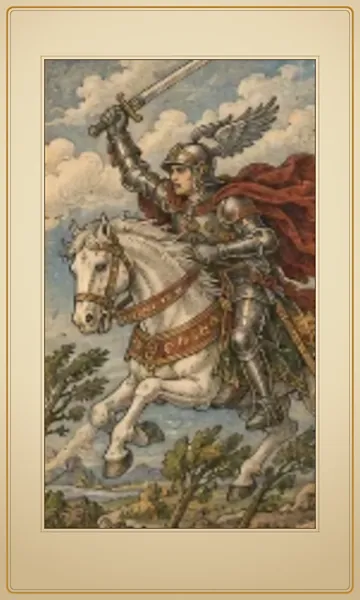 Knight of Swordscharging in, sword first
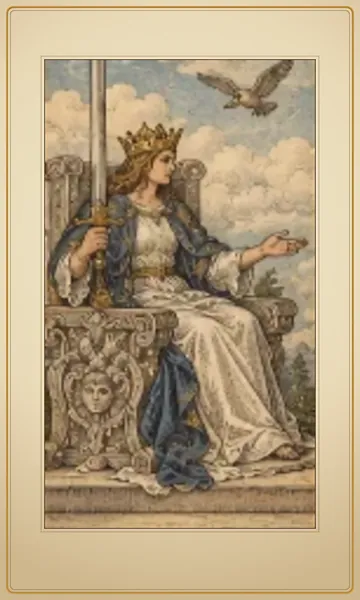 Queen of Swordsclear sight, clean boundaries
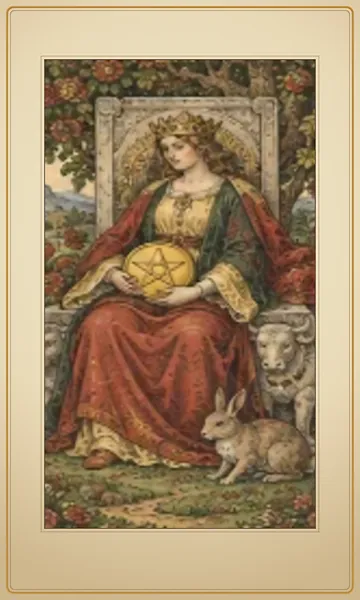 Queen of Pentaclespractical, nurturing care
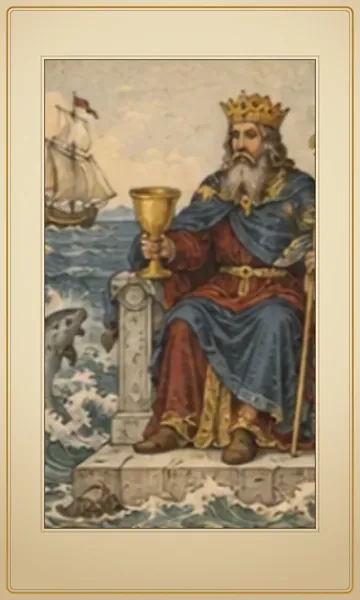 King of Cupsfeeling, held steady
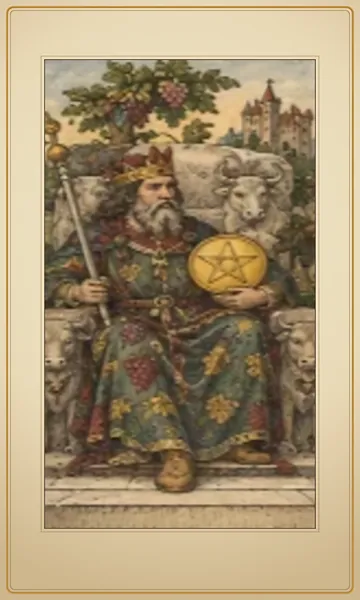 King of Pentaclesabundance and security
Questions people ask
How do I know if a court card is a person?
Check the question and the cards around it. A relationship question with other people-cards nearby leans toward a person, while a task or decision leans toward an approach or a part of you. If you cannot tell, read it all three ways and see which version tells you the most.
Do court cards have to match the gender of the person they describe?
No. The titles are traditional, but the qualities belong to everyone. Read a Queen of Swords as clear, honest thinking in anyone, and a King of Cups as emotional steadiness in anyone.
What is the difference between a Page and a Knight?
A Page is a learner who explores and carries news, while a Knight acts, pursues and moves things along at speed. Pages ask for curiosity and small experiments, and Knights ask you to check direction while you move.
Can a court card be me?
Yes, and it is often the most useful reading. A court card can describe the side of you that the situation brings out. Ask which of its strengths you could lean on, and which of its flaws you might be falling into.