
Good Tarot Questions: 30 Examples and How to Word Your Own
Most disappointing tarot readings begin with a disappointing question. The cards cannot rescue a question that asks for a guarantee, a verdict on someone else or a date on the calendar. This guide shows what a good question looks like, offers about thirty to borrow grouped by area of life, and rewrites the common weak ones.
What a good tarot question looks like
A good question has four qualities. It is open, usually beginning with what or how rather than will or should. It is about you and your choices, not about the secret thoughts of a person who is not in the room. It is specific enough to picture, because “what is going on with my life?” gives the cards nothing to hold. And it is pointed at something you can do, even if the something is only to notice or to ask.
You do not have to get it perfect. A question is a rope you throw to the cards, and a slightly crooked one still works. What you want to avoid is a question that has already decided its answer, or one that makes the reading into a test. If you are afraid of what the cards might say, say so in the question: “I am afraid I made a mistake. What do I need to see clearly?”
Write the question down before you shuffle. It keeps your attention steady, and later you can check honestly whether the reading answered what you asked.
Questions about yourself
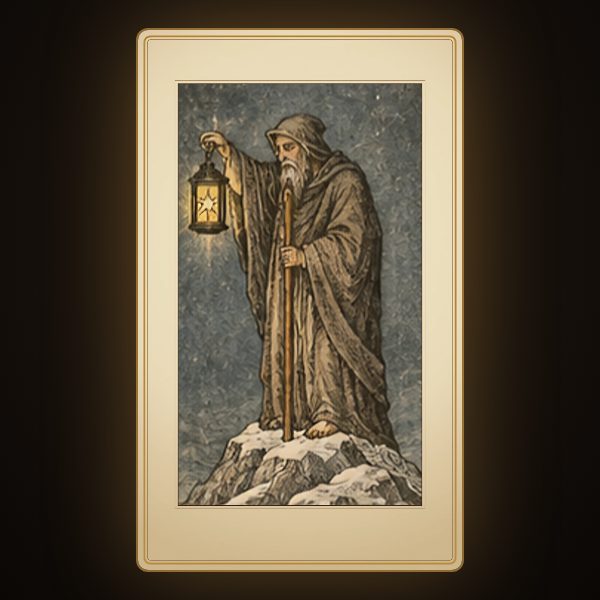
These are the safest ground for tarot, because the only person whose mind you need to read is your own. They suit single cards and three-card spreads, and often bring up cards like The Hermit when the answer is to slow down and listen.
“What do I most need to understand about how I am feeling this week?” “What am I avoiding looking at?” “Which of my habits is working against me right now, and which is quietly helping?” “What would it look like to treat myself the way I would treat a good friend?”
Notice how each one invites the cards to describe a pattern, not to rule on a fact. If a card seems wrong, that is useful: ask what the card says about your first reaction to it.
Questions about love and relationships
Love questions are where the temptation to ask about the other person is strongest, so it helps to have ready alternatives that keep you on your side of the table.
“What do I need to be honest about in this relationship?” “What am I hoping for here, and is it realistic?” “What pattern from past relationships might I be bringing into this one?” “How can I take care of myself while I wait to see how this develops?”
If you are single, try “What would help me feel open to connection?” in place of a question about when someone will turn up. A Page of Cups, for instance, in answer to that question might suggest small, sincere gestures, not a grand plan.
Questions about family and friends
Family questions often carry history, so give them a gentle tone. The aim is to understand your own part in a dynamic and to find a next step you control.
“What is the best way to approach the conversation I have been putting off with my sibling?” “What do I need from this friendship, and have I said it out loud?” “How can I support a family member without taking on their problems?” These pair well with Justice when fairness is at issue, since that card asks what is true and what is owed on both sides.
Avoid asking what a relative “really thinks.” Ask instead what you could say or do that would be honest and kind, and let the cards help you prepare.
Questions about work and money
Work and money carry a lot of fear, so questions here benefit from being practical and bounded.
“What would help me do my best work on this project?” “What do I need to learn or ask before accepting this role?” “What is draining me in my current job, and what could I change?” “How can I make my case for a raise in a way that is honest and clear?”
For money: “What belief about money is shaping my decisions right now?” “What is one realistic step toward more financial stability this month?” “What am I avoiding looking at in my budget?” These questions ask the cards to reflect your attitudes, which is what they can do. Decisions about debt, investing or contracts belong with qualified professionals who can see the actual figures.
Questions about decisions and study
For a decision, the Two of Swords is the figure frozen between options, and good questions help her put the blindfold down.
“What matters most to me in this choice?” “What would I gain and lose with each option?” “What information am I missing?” Notice that none of them asks which option is right. They ask for the structure under the choice, and then the choice becomes easier to make yourself.
For study and learning: “How can I make my study time more effective?” “What is getting in the way of my focus?” “What would help me feel confident before this exam?” A reading cannot tell you the result of an exam, but it can show what to do with the next two weeks, which is the part that affects the result.
Questions about creativity, grief and change
Creative questions: “What does this project want from me next?” “What is holding back my first draft?” “How can I make room for play in my work?” Cards like the Page of Cups and the Ace of Wands are common answers, since both are about the first spark.
Grief and change need gentle questions: “What do I need right now as I move through this loss?” “What is ending, and what am I afraid to let go of?” “What small thing could help me get through this week?” “What am I still carrying that I could put down?” If you are in deep grief, The Star can appear as a quiet companion rather than a fix. Take the reading slowly, and remember that tarot does not replace support from people who know you or from a counselor.
If the pain is overwhelming or you feel unsafe, contact a doctor, a counselor or a local helpline before anything else.
Weak questions and how to rewrite them
Some patterns reliably give thin readings. Here are the common ones with fixes.
Yes or no about another person. “Does he love me?” “Is she lying to me?” The cards cannot read minds, and a reading that claims to can do harm. Rewrite: “What do I need to understand about my feelings in this relationship?” or “How can I ask for the honesty I want?”
Timing guarantees. “When will I get a job?” “Will I be married by next year?” Nothing in the deck is a calendar. Rewrite: “What can I do in the next month to move my job search forward?” or “What am I ready for in love?”
Medical and legal outcomes. “Will my treatment work?” “Will I win the case?” These are not for tarot at all. Ask a doctor or a lawyer. If you want to reflect, ask “How am I feeling about this process, and what support do I need?”
Questions with a hidden answer. “Isn't it obvious that I should leave?” is a request for agreement. Rewrite: “What is making this decision hard, and what do I actually want?”
Stacked questions. “Should I move, change jobs and break up?” Split it into three readings, or choose the one that matters most.
Refining a question as you go
Questions are drafts. If a reading feels flat, look at the question before blaming the cards. Was it too broad, or secretly a yes or no? Was it about someone else? Rewrite it and, if you really need a new reading, wait for something to have changed or at least for a night's sleep, because repeating the same question until you get the card you want says more about you than about the deck.
A useful follow-up after any reading is the “so what” question: “What is one small thing I could do this week because of this?” If the answer is nothing, the reading may still have been a pleasant reflection. If the answer is something, write it down and do it. That is the real point of asking well.
Cards in this guide
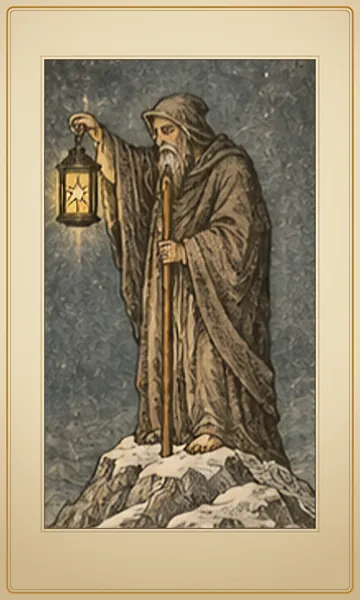 The Hermit
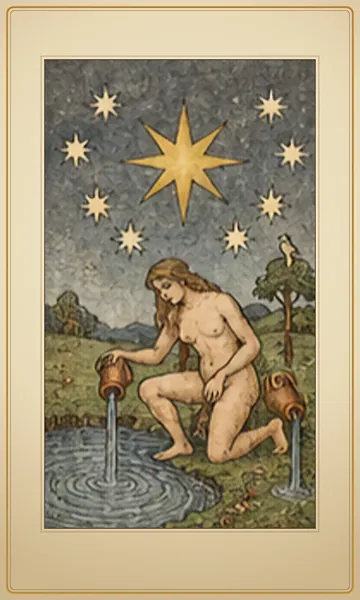 The Star
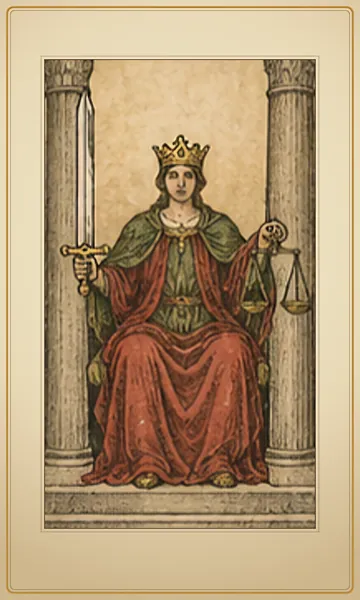 Justice
 Two of Swords
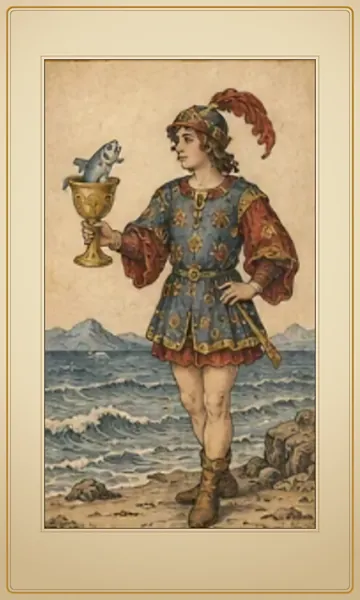 Page of Cups
 Ace of Wands
Questions people ask
What is a good question to ask the tarot?
A good question is open, starts with what or how, concerns your own choices and feelings, and points toward something you can do. For example, “What do I need to understand about this job offer?” works much better than “Will I get the job?”
Can I ask tarot yes or no questions?
You can, but the answers are thin and tend to mislead. A card does not carry a hidden yes or no. If you want a yes-or-no frame, rewrite it as “What would help me decide?” and read the cards as considerations.
Is it okay to ask about another person?
It is better to ask about your relationship to them or your next step, since the cards cannot know what someone else thinks. A question such as “How can I approach this conversation?” gives you something to work with and respects their privacy.
Should I ask tarot about health, legal or money emergencies?
No. Those questions need qualified professionals who can look at your real situation. You can use tarot to reflect on how you feel about a hard situation, but never to decide medical, legal or financial matters.