Tarot Glossary: 39 Terms Every Beginner Meets
Tarot comes with a vocabulary of its own, and a good deal of it sounds more mysterious than it is. This glossary defines 39 terms you will meet in books, videos and readings, in plain language and grouped by what you are doing: learning the deck, reading the cards, laying out a spread, thinking about what a reading is and keeping it honest.
The basics
Tarot: A deck of 78 illustrated cards used for storytelling, reflection and, in some traditions, divination. Most people today use it as a structured way to think about a question, not as a way to foretell fixed events.
Rider-Waite-Smith: The most widely used tarot tradition, from a deck published in 1909 and illustrated by Pamela Colman Smith. Its pictured scenes on every card, including the numbered ones, are why so many modern decks and guides follow it, and the readings on this site do too.
Arcana: A word meaning secrets or mysteries, used for the two halves of the deck. Arcana is the plural and arcanum the singular, though in practice people simply say Major Arcana and Minor Arcana.
Major Arcana: The 22 cards numbered 0 to 21, from The Fool to The World. They stand for large themes and turning points, and readers often treat them as a single story. A Major Arcana card is sometimes called a trump.
Minor Arcana: The 56 everyday cards, divided into four suits. They describe the practical texture of a situation: what you are working on, feeling, saying and handling.
Suit: One of the four families of the Minor Arcana: Wands, Cups, Swords and Pentacles. Each suit has ten numbered cards and four court cards, and covers its own part of life, such as drive, feeling, thought or the material world.
The cards and what is on them
Numbered cards: The Ace through Ten of each suit, sometimes called pip cards. Together they tell a ten-step story that repeats in every suit, so the number gives you the stage and the suit gives you the setting.
Court cards: The Page, Knight, Queen and King of each suit. They can describe people, parts of yourself or ways of approaching a situation. Reading them as a particular person is the most common beginner mistake.
Elements: The associations that readers link to the suits: fire for Wands, water for Cups, air for Swords and earth for Pentacles. They are a memory aid and a way to feel a suit's temperament, not a scientific claim. The Ace of Wands feels like a spark partly because of that link.
Keyword: A short phrase that sums up a card, such as “heartbreak” for the Three of Swords. Keywords are handy for learning, but they are a starting point. The picture and the question should always have the final say.
Upright: A card as it falls the right way up. Upright meanings are the main, default meaning of a card.
Reversal: A card that lands upside down. Some readers use it to show a blocked, inward, delayed or excessive version of the card, and others ignore reversals altogether. Both approaches are fine.
Significator: A card chosen to stand for the person asking, or for the subject of the question, such as the Queen of Cups for a sensitive, empathic person. Many modern readers skip it, and it is not needed to get a good reading.
Spreads and practice
Spread: A pattern in which cards are laid out, with a meaning assigned to each place. A spread turns one big question into several smaller ones.
Position: The place within a spread, and the question that place asks. The same card means different things as “what helps” and “what blocks.”
Three-card spread: A simple layout of three cards, often read as past, present and future, or situation, obstacle and advice. It is the usual starting point for beginners.
Celtic Cross: A traditional ten-card spread that looks at a situation from many angles, including its roots, challenges and likely direction. It is popular and also a lot to read at once.
Daily draw: A single card pulled each day as a prompt for reflection. It is the easiest way to build familiarity with the deck.
Clarifier: An extra card drawn to explain another card or part of a spread that is unclear. A single clarifier is useful, though drawing clarifiers repeatedly until you like the answer is a way of fooling yourself.
Querent: The person who asks the question in a reading. If you read for yourself, you are the reader and the querent at once.
Reader: The person interpreting the cards. A good reader describes what the cards seem to say and invites the querent to respond, rather than announcing what will happen.
Decks and habits
Oracle deck: A deck of cards for reflection that does not follow the tarot structure of 78 cards and four suits. Oracle decks vary widely in size, themes and imagery.
Shuffle: Mixing the deck before a reading. There is no required method. Use whatever way feels natural and keeps the cards from getting damaged.
Cut: Dividing the shuffled deck into piles and restacking them, a ritual some readers use as a final pause before drawing.
Cleansing: Any small ritual used to mark a fresh start for a deck or a reading, such as knocking on the deck, wiping it, or simply taking a breath. It is a personal habit with no technical effect on the cards.
Reading cloth: A cloth on which cards are laid. It protects the cards and gives the reading a little ceremony, which some readers find helps them concentrate.
Tarot journal: A notebook in which you write the date, question, cards and your reading. It is the single most effective learning tool, since you can look back to see what actually helped.
Ideas behind the reading
Intuition: The sense of knowing something before you can explain why. In tarot it is the part of reading that notices how a picture strikes you, and a good reading uses it together with the cards' traditional meanings.
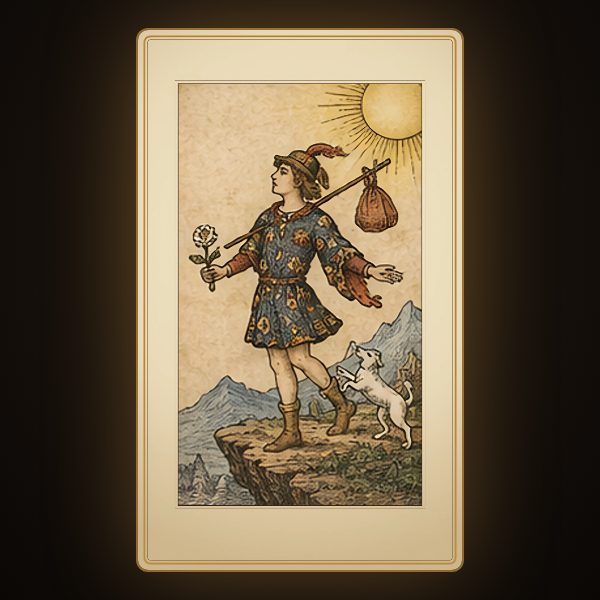
Archetype: A pattern or character that appears across stories and cultures, such as the nurturer, the ruler or the wanderer. The Empress, the Emperor and The Fool are often described as archetypes. The idea makes the cards feel like mirrors for common human experience.
Shadow: The parts of ourselves we avoid, deny or project onto others. Readers often speak of a card's shadow side, such as The Devil's picture of a chain you have put on yourself, to point to what a card might be asking you to look at.
Fool's journey: A way of reading the 22 Major Arcana as one story in which The Fool travels from innocence through lessons and trials to completion. It is a modern teaching device, not a rule of the deck.
Divination: The practice of seeking knowledge about the future or the unknown through signs. Many people use tarot this way. This site treats it as a tool for reflection and for entertainment.
Cold reading: A technique in which a reader gives broad statements and shapes them according to the listener's reactions. It is how some stage performers appear to know things they do not. Knowing about it helps you judge any reader, including yourself.
Keeping a reading honest
Barnum effect: The tendency to feel that a vague description is personal and accurate, as in horoscopes. A reading that fits everyone fits nobody in particular, so look for details and specific questions.
Confirmation bias: The habit of noticing what supports our hopes or fears and ignoring the rest. It is the reason to write predictions down and check them later.
Projection: Seeing our own feelings or traits in another person or in a card. It is useful in a reflective reading, since what you see tells you about you, and a problem if you claim it as a fact about someone else.
Third-party question: A question about someone who is not present, such as “What does my boss think of me?” Cards cannot know another person's mind, so a better question is about your side of the situation.
Free will: The idea that you can choose what you do next. Most modern readers take it as the basis for reading, saying the cards show tendencies and options, not a fixed future.
Self-reflection: The thoughtful examination of your own feelings, choices and patterns. It is the main use of tarot on this site, and it is why a reading ends well when it leaves you with one small, concrete thing to try. Tarot is not a replacement for medical, legal, financial or psychological advice, and anyone in crisis should contact a professional or a local helpline.
Cards in this guide
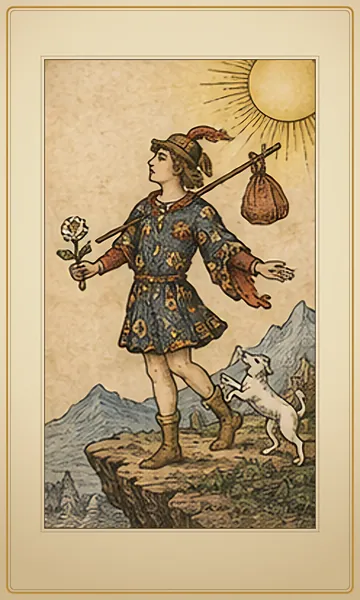 The Fool
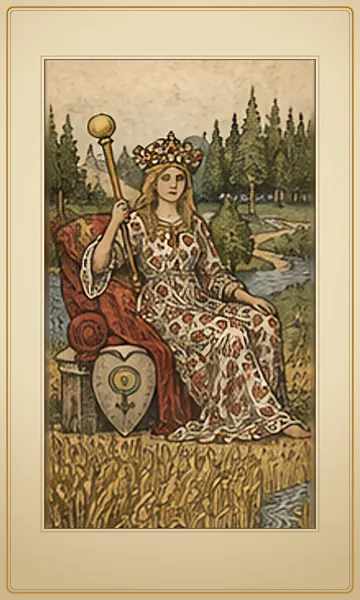 The Empress
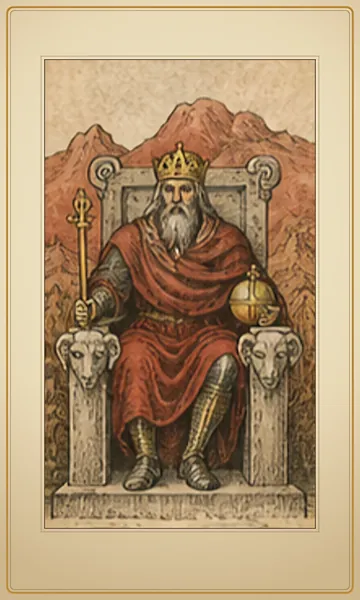 The Emperor
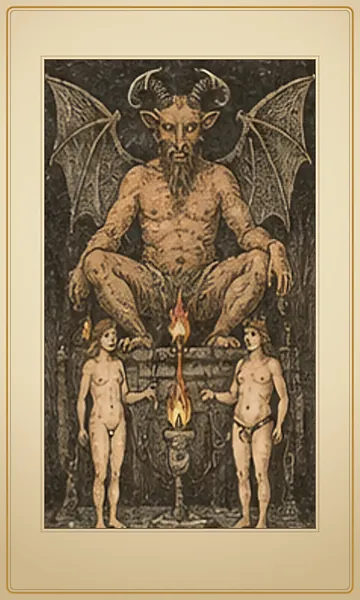 The Devil
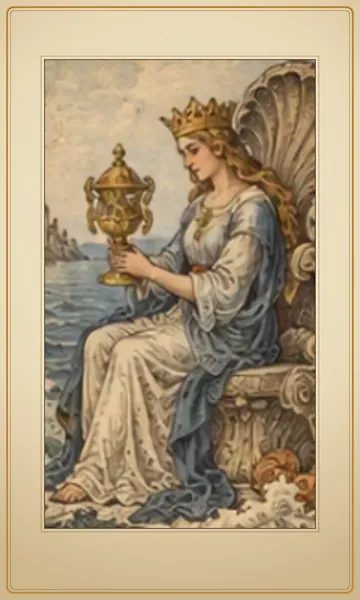 Queen of Cups
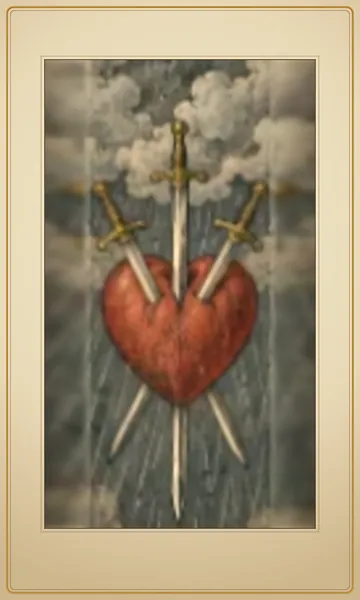 Three of Swords
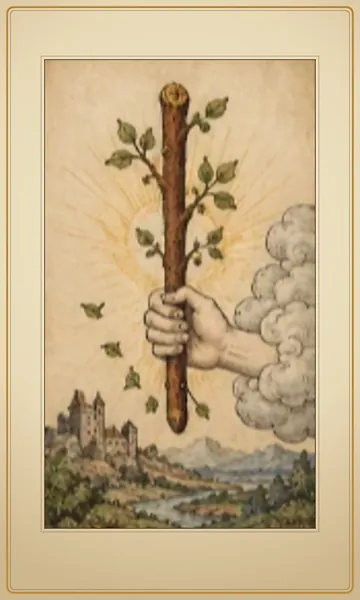 Ace of Wands
Questions people ask
What are the Major and Minor Arcana?
The Major Arcana are the 22 cards numbered 0 to 21 that carry large life themes, from The Fool to The World. The Minor Arcana are the other 56 cards, in four suits, which cover everyday matters such as work, feelings, thinking and money.
What is a spread in tarot?
A spread is a layout in which each card position has its own question. A three-card spread might ask about situation, obstacle and advice, so each card answers a different part of your overall question.
What does querent mean?
The querent is the person asking the question in a reading. If you read for yourself, you are both the querent and the reader.
Is a tarot reading the same as cold reading?
No, but the two can look alike, which is why it helps to know the difference. Cold reading uses general statements and the listener's reactions to seem insightful. A good tarot reading starts from the actual cards and your actual question, and invites you to question what you hear.