Three Card Spread: Two Layouts, With an Example
If you only ever learn one tarot spread, make it this one. Three cards are enough to tell a story, small enough to hold in your head, and flexible enough to fit almost any question. Here are two classic layouts, a worked example, and what to do when the cards seem to argue.
Why three cards work so well
One card gives you a mood. Two cards give you a contrast. Three cards give you a story, because a story needs a beginning, a middle and an end, or at least a setup, a complication and a way through. That is why almost every tarot reader, however elaborate their other spreads, keeps coming back to three.
It is also a forgiving size for beginners. You can look at all three cards at once, notice how they relate, and still feel like you understood each one. With ten cards in a Celtic Cross it is easy to get lost in the details. With three you are forced to ask what the cards are saying together, which is the main skill in tarot.
Lay the cards left to right in a row, face down, and turn them one at a time so you have a moment with each before the next one arrives.
Layout one: past, present, future
The best known version reads left to right as past, present and future. The first card shows what has led here: the background, the habit, the event that set things in motion. The second shows where you stand now, including things you may not have said out loud. The third shows where things are heading if the current pattern continues.
The word "future" is the part to handle carefully. The third card is a direction of travel, not a fixed fate. If a situation continues exactly as it has been, this is the likely shape of it, and you can change the shape by changing what you do. Think of it as the forecast for a road you are free to leave.
This layout works best for questions about a story that has already started, such as a friendship that has cooled, a project that stalled or a long period of restlessness. It is less useful for a decision you have not yet made, because there is no past to read.
Layout two: situation, obstacle, advice
This version is more practical and tends to be the one that people go back to. The first card describes the situation as it is right now. The second names the obstacle, the thing in the way, which might be outside you or might be a habit of your own. The third offers advice: an approach, a stance or a first step.
Because it ends with advice instead of prediction, this layout fits decisions and sticking points far better than the first. It also avoids the trap of treating the last card as a verdict. The advice card does not tell you what will happen; it suggests what could help.
A good test for which layout to use: if your question begins with "What happened with..." use past, present, future. If it begins with "What do I do about..." use situation, obstacle, advice.
A worked example
Imagine someone asking, "I am thinking about leaving my job to freelance. What should I understand?" They choose situation, obstacle, advice and draw the Seven of Cups, the Four of Pentacles and the Ace of Wands.
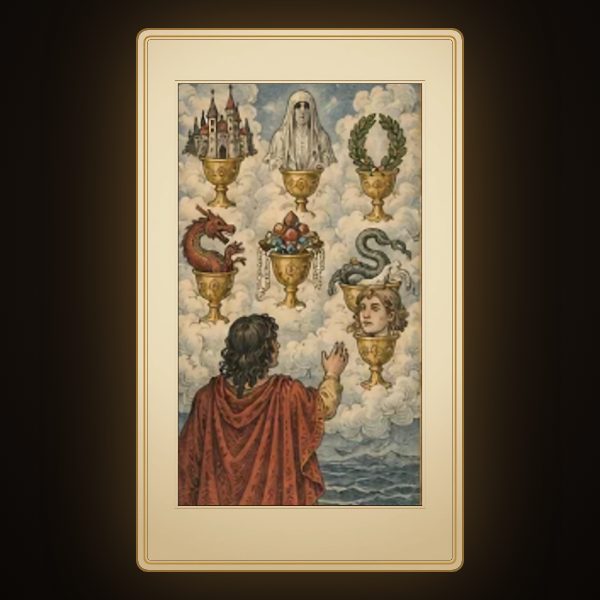
Situation: the Seven of Cups shows a figure facing a crowd of glowing options floating in clouds. Lots of possibilities, mostly imagined and untested. The person is excited by the idea of freelancing, but may not yet have a clear picture of what the work would look like on a Tuesday.
Obstacle: the Four of Pentacles is someone clutching a coin to their chest. The obstacle is the hold that security has on them. That is not a criticism, since a steady paycheck is a perfectly good thing to value. It just names the tension underneath the whole question.
Advice: the Ace of Wands is a hand offering a branch that is just starting to sprout. It is a spark, not a finished plan. The suggestion is to start small: take one freelance project on evenings, test the idea, and see how it feels before burning anything down.
Put together, the story reads: you have many daydreams and no tested evidence, a firm hold on your safety, and the most useful next move is a small, real experiment. That is something to act on, and it does not pretend to know whether the leap would succeed.
Other three-card layouts to try
Once you are comfortable, the same three-slot frame can be rearranged. Mind, body, spirit is a check-in for how you are doing overall. You, the other person, the relationship works for conflicts and friendships. Strength, weakness, lesson suits a project or a skill you are building. Choice A, choice B, what you are not seeing handles decisions between two paths.
Pick the positions before you draw, not after. It is tempting to reassign meanings once the cards are on the table, but fixing the frame first keeps the reading honest.
Tips for reading three cards together
Look for repetition. If two cards share a suit, the theme of that suit is probably loud: two Cups point to emotion, two Swords to thinking and communication. If two cards carry the same number, the number's idea repeats, like beginnings for aces or completion for tens.
Count the Major Arcana. Several majors in a three-card spread suggest something weighty or part of a larger life pattern, while an all-minor spread usually points to everyday matters you can influence directly.
Notice the figures' gaze and direction. Do the people in the cards look toward each other, away, or off the edge of the picture? A figure facing the previous card says "this follows from that." A figure turned away may be showing a step you are avoiding.
If the cards seem to contradict each other, that is often the answer. A card of confidence next to a card of fear describes ambivalence, which is a real and useful thing to name. And remember this is for entertainment and self-reflection, so hold your conclusions lightly.
Cards in this guide
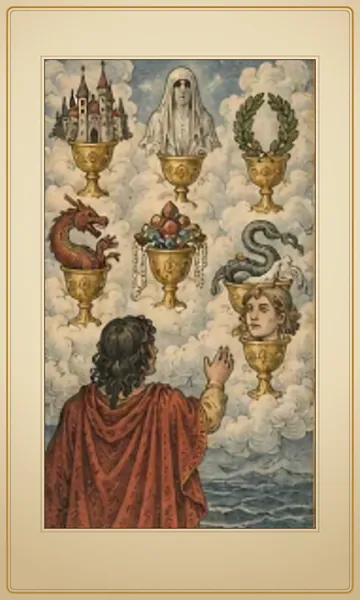 Seven of Cups
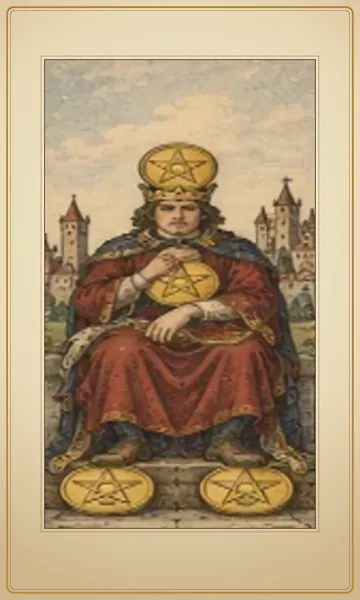 Four of Pentacles
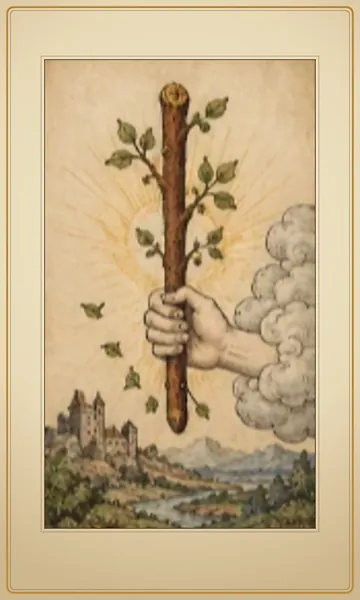 Ace of Wands
Questions people ask
What is the best three card tarot spread?
It depends on your question. Past, present and future suits stories that have already begun, and situation, obstacle and advice suits decisions and sticking points. If you cannot decide, situation, obstacle and advice is the more practical default.
Does the third card predict what will happen?
Not as a certainty. In a past, present, future spread it shows the direction things are heading if nothing changes. In a situation, obstacle, advice spread it offers a suggestion, and what you do with it is up to you.
Can I use a three card spread for yes or no questions?
You can, but it works better with "what" and "how" questions. Try asking what you need to understand about the decision, and let the three cards describe the situation, the obstacle and your best next step.