Yes or No Tarot: How to Read a One-Card Answer
Everyone wants a quick yes or no, and a single card is the quickest reading there is. It can be useful if you treat it as a nudge rather than a ruling. This guide covers how to ask, how to read the lean of a card, and when to ask a better question instead.
An honest word first
Tarot cannot see what is going to happen, so a yes-or-no card is not an oracle. What it can do is give you a quick emotional read: you draw a card, you notice whether you feel relieved or disappointed, and that reaction tells you something about what you wanted. That alone is often worth the thirty seconds.
Used this way, a yes-or-no draw is a tool for self-knowledge. It is for entertainment and self-reflection, and it should never be the thing that decides a matter of health, law, money or safety. If the stakes are high, the cards are at most a prompt for a conversation with someone qualified.
How to ask a yes-or-no question
Make the question narrow and about your own action. "Should I send the email tonight?" is better than "Will things work out with my boss?" The first has a clear action and a short time frame. The second asks the cards to predict another person's behavior across an unknown future.
Keep it to one question at a time. If you pack in two ("Should I move and also change jobs?") the card has no way to answer both. Phrase it so that yes and no both describe something real you could do. And decide before you draw how you will read the answer, as in the sections below, so you do not move the goalposts afterward.
Draw one card, shuffled however you like. Do not redraw if you dislike the result. If you find yourself wanting to, that is your answer to a different question: what do I actually want here?
Why 'what' and 'how' questions give better answers
A yes-or-no question squeezes a rich card into a single syllable. Look at the difference. Ask "Should I move to Denver?" and you draw the Eight of Wands. Yes, probably, because it is about speed and momentum? Or no, because it suggests things moving too fast? The card is not clear, because the question was not.
Ask instead, "What would moving to Denver ask of me?" and the Eight of Wands becomes a clear and useful answer: it would ask you to move quickly, commit to a fast timeline, and be ready for a lot of change at once. Now you can decide whether that excites or exhausts you. That is a much better use of the same card.
The same goes for "how." "How can I approach this conversation?" will always give you more to work with than "Will this conversation go well?" If you must keep a yes-or-no format, treat the card as a lean of tone and follow it with a second card for "What do I need to know about this?"
Which cards lean yes, no or maybe
There is no universal chart, and different readers disagree, so take the following as rules of thumb rather than law.
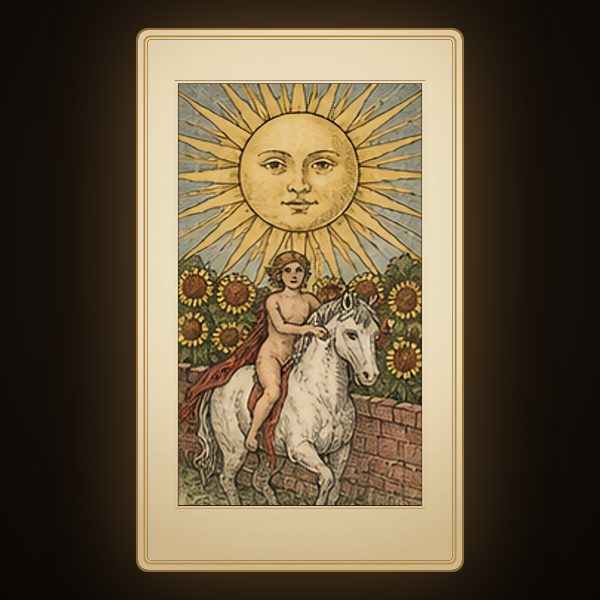
Cards that often lean yes are the ones with a sense of fulfillment or momentum: The Sun, The World, The Star, The Chariot, the Aces, the Ten of Cups and the Nine of Pentacles. They suggest that the direction you are considering has energy and support behind it.
Cards that often lean no are the ones with endings, obstruction or warnings: The Tower, the Ten of Swords, the Five of Cups, the Eight of Swords and The Devil. They tend to say that the path as you imagine it comes with a cost, a trap or a collapse you should look at first.
Cards that often lean maybe, or not yet, are the ones of pause and mixed signals: the Two of Swords, The Hanged Man, The Moon, the Four of Swords and the Seven of Cups. These are the cards of "wait," "you do not have enough information," or "you are not being honest with yourself."
Court cards are the trickiest. They usually describe a person or a manner, not an answer, so read them as advice on how to proceed: boldly, patiently, warmly or critically.
A simple system you can use
If you like structure, here is a straightforward approach. Cards of fulfillment and forward motion lean yes; the heavy-sounding cards listed above lean no; anything ambiguous is a maybe. Reversed cards, if you use them, soften a yes to a not yet and a no to a not as bad as it seems.
This is a convenience, not a science. Where the card does not clearly fit a lean, use the picture. Is the figure moving forward, or stuck, or looking away? Is the scene calm or tense? You will usually feel the lean before you can justify it.
Some people prefer a different approach entirely: draw a card and ask whether the picture feels like a green light, a red light or a yellow one. Both ways are valid, as long as you decide in advance.
The limits, in plain terms
A one-card answer is thin. It does not know your circumstances, your history or the person on the other end of your question. It is not a substitute for thinking, for talking to someone who knows you, or for professional advice.
Please do not use yes-or-no tarot for questions about medical treatment, legal matters, financial commitments, other people's safety or whether anyone will live or die. These deserve real information and real people.
For everything else, the best habit is to treat the card as a conversation starter with yourself. Ask what the card made you feel, why, and what you will do now. If you would rather talk the card over with someone, at TheMyths' Mystic's Table the crone will turn your yes-or-no into a fuller reading and tell you plainly what she sees.
Cards in this guide
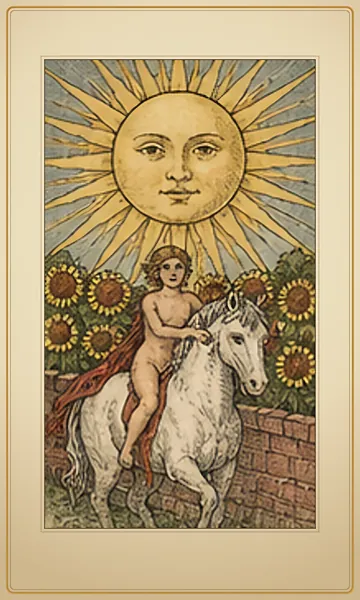 The Sun
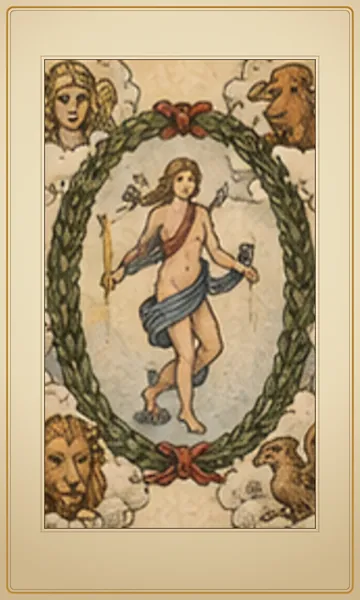 The World
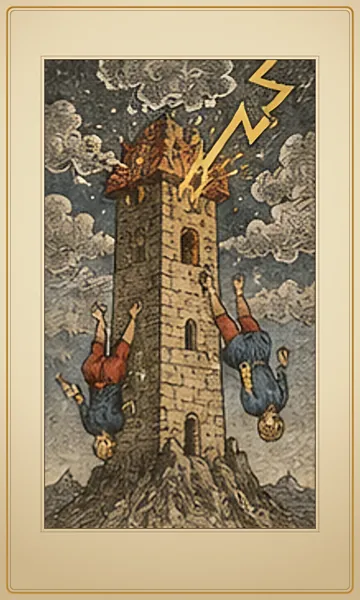 The Tower
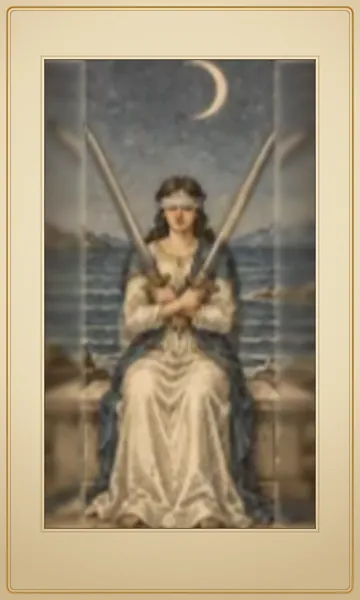 Two of Swords
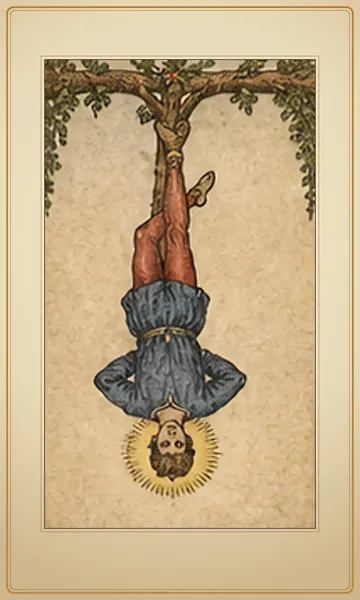 The Hanged Man
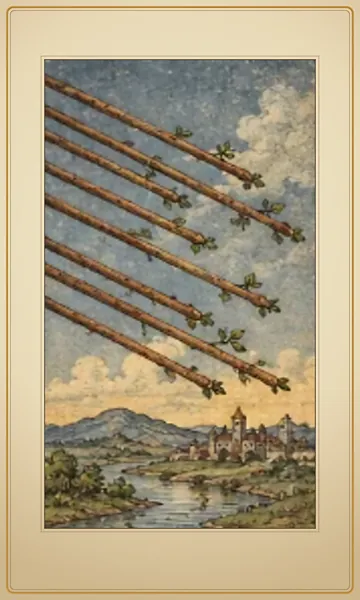 Eight of Wands
Questions people ask
How do I ask tarot a yes or no question?
Make it narrow, about your own action and limited in time, like "Should I send this message tonight?" Draw one card, decide in advance how you will read it, and do not redraw if you dislike the answer.
Which tarot cards mean yes?
Cards of fulfillment and forward motion, such as The Sun, The World, The Star, The Chariot and the Aces, usually lean yes. Treat that as a rule of thumb: the picture and the question matter more than any chart.
Is yes or no tarot accurate?
It cannot predict outcomes, so accuracy is the wrong measure. It is better as a quick check on what you feel and want. For anything important, ask a "what" or "how" question and use the answer to guide your own decision.