The Celtic Cross Spread: All 10 Positions Explained
The Celtic Cross is the best-known tarot spread, and the one that looks most intimidating. It is ten cards, but it is really two small stories: a cross in the middle that describes the situation, and a staff on the right that describes you and where things are going. Here is every position, in the order to read them, with an example.
How the spread is laid out
Place the first card in the center. Lay the second across it sideways. Put the third below the cross, the fourth to its left, the fifth above it and the sixth to its right. That makes the cross: six cards around a central point. Then build a vertical staff of four cards to the right, from bottom to top, positions seven through ten.
Think of the cross as the situation and the staff as the person looking at it. The cross answers "What is going on?" and the staff answers "How does this look from where I stand, and where is it heading?" Seeing the two halves makes the spread feel far less overwhelming.
Decide your question before you shuffle, and keep it open. The Celtic Cross suits "What do I need to understand about..." questions much better than anything with a yes or no.
The cross: positions one to six
Position 1, the present or heart of the matter. This is the center of the question: what the situation is really about at this moment.
Position 2, the crossing. This card lies across the first and shows the challenge or complication. It does not have to be negative. It can be the thing that is pulling in another direction.
Position 3, the foundation. Below the center, this card shows the root: what the situation rests on, often something you do not talk about much.
Position 4, the recent past. To the left, it describes what has just passed and is now moving out of the picture.
Position 5, the crown. Above the center, this is your conscious aim, or the best realistic outcome you are reaching for. It is what you are thinking about when you think about this.
Position 6, the near future. To the right, it is what is likely to come into view next. It is a coming chapter, not a final destination.
Some readers rename these positions or swap a couple of them, and no single wording is official. What matters is that you fix your own meanings before turning the cards over.
The staff: positions seven to ten
Position 7, you. This card describes your stance: how you are showing up, or how you see yourself in this situation.
Position 8, your surroundings. It shows the influence of other people and the environment, including the expectations of family, workplace or friends. It is a description of climate, not a window into what someone is thinking.
Position 9, hopes and fears. This card is often the most revealing, because hopes and fears tend to be two sides of one thing. If the card seems to fit both, it probably does.
Position 10, the outcome. This is where things are heading if the current pattern continues, drawing together everything beneath it. It is a trajectory, not a sentence. You are always allowed to change the pattern, and a good reading will leave you with an idea of how.
The order to read them in
Do not read from one to ten like a list. A better route is as follows. First, look at the whole spread and notice its mood and the balance of majors and minors. Then read cards one and two together, since they are the core tension. Next read three, four, five and six as the context around the core: roots, past, aim, near future. Then move to the staff and read seven through ten from the bottom up, which gives you a story about the person and where things are going.
Last, look for echoes. Does the same suit appear in several places? Does a person card at position 8 resemble the card at position 7? Repeats are the spread's way of underlining. Then step back and ask what the spread says as a whole, in two or three sentences.
A worked example
The question: "I feel stuck in my career. What do I need to understand?" The cards fall like this.
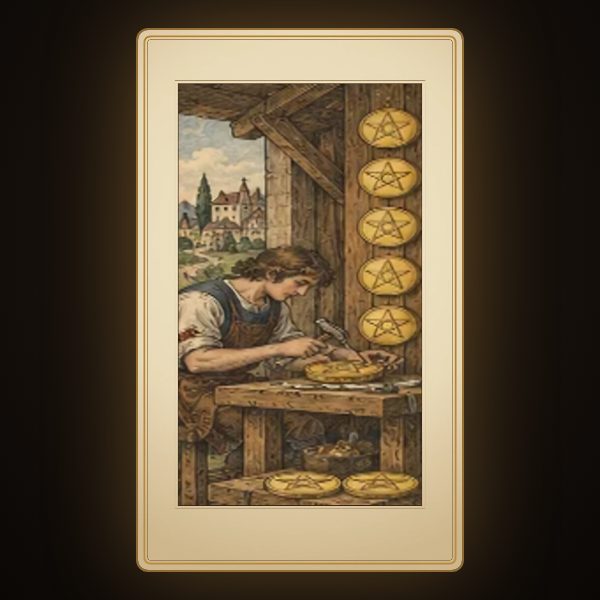
1, the Eight of Pentacles: diligent craft, head down. The present is a lot of competent, repetitive work. 2, the Two of Swords: a blindfolded figure with crossed blades. The challenge is a refusal to look at a decision. 3, The Hierophant: inherited rules and expectations. The foundation may be a belief about what a "proper" career looks like. 4, the Six of Cups: a comfortable memory of an earlier time. 5, The Star: hope, and a wish for something more open and honest. 6, the Page of Wands: a curious beginning on the horizon.
7, the Nine of Wands: you, wounded but still standing guard. 8, the Three of Cups: friends and colleagues who are supportive. 9, The Moon: the hope and the fear mingle, and the fear has no name yet. 10, the Ace of Pentacles: a concrete new opportunity, if you take it.
Read together: you have worked hard and well inside a framework you inherited (3, 1). You are avoiding a decision (2), and you are tired from standing guard (7). The hope is for something honest and fresh (5), and the fear is vague (9). Friends are on your side (8), and a small, curious experiment (6) could lead to something real (10). It is a reading to think about, not a promise.
When to use it, and when not to
The Celtic Cross is best for a question with several moving parts, a question you have been turning over for weeks, or a day when you want to sit down with the cards properly. It rewards time. Give it half an hour, write down each position, and let yourself notice the links.
It is less suited to quick decisions, yes-or-no questions or a bad night when you are too tired to hold ten ideas in your head. For those, one or three cards will serve you better. A long spread does not make a reading more accurate. It only makes it longer.
As with any tarot, treat it as a tool for entertainment and self-reflection. If you would like to watch the whole thing unfold with commentary, the Mystic's Table at TheMyths can draw and read a larger spread for you while the crone narrates the connections.
Cards in this guide
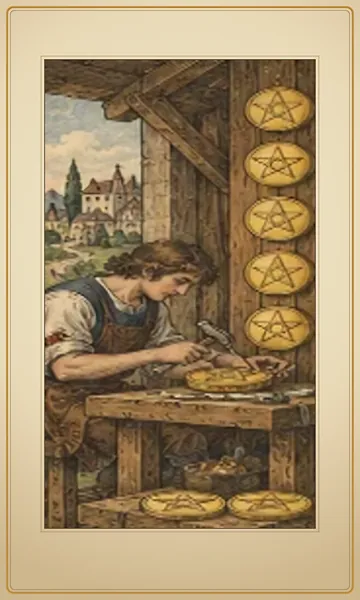 Eight of Pentacles
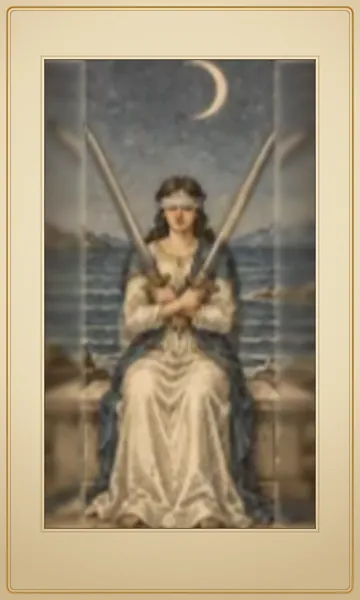 Two of Swords
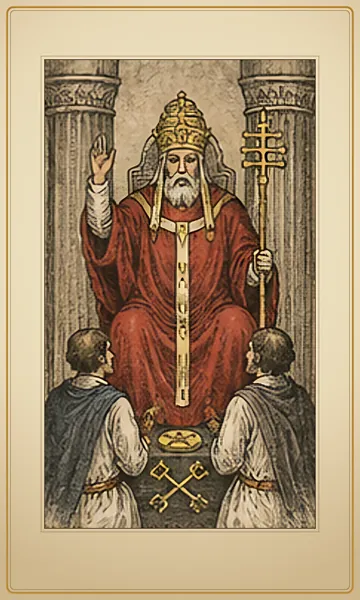 The Hierophant
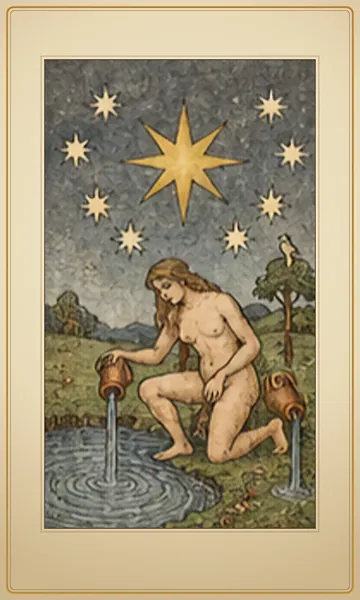 The Star
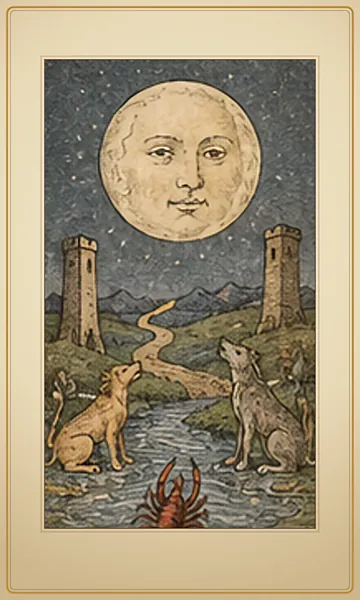 The Moon
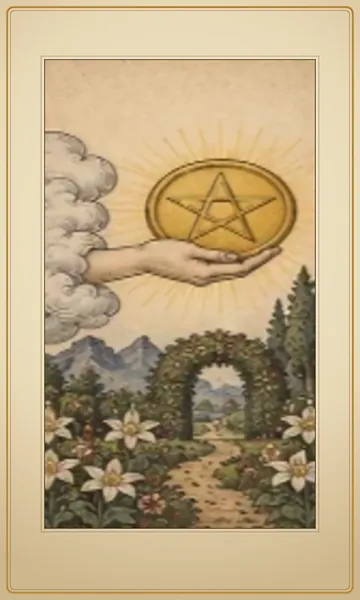 Ace of Pentacles
Questions people ask
What order do you read the Celtic Cross in?
Start with the whole picture, then cards one and two as the core tension, then three through six as context, then the staff from seven to ten. Finish by asking what the spread says as a whole.
Is the Celtic Cross good for beginners?
It is fine once three-card spreads feel comfortable. Ten cards at once can feel like a lot, so thinking of it as a cross for the situation and a staff for you and where things are heading makes it manageable.
Does card ten predict the future?
Not exactly. It shows where things are heading if the current pattern continues, which makes it a direction rather than a verdict. You can change course, and a good reading shows you how.