Is Tarot Real? An Honest Answer
It is a fair question, and it deserves a straight answer instead of a sales pitch. Here is what tarot can and cannot do, why it feels meaningful anyway, and how to use it without letting it make decisions it has no business making.
What 'real' might mean
The question can mean three different things. Is tarot a real practice that real people do? Yes, plainly. Is it a reliable way to predict the future? There is no good evidence that it is, and anyone who says otherwise is asking you to take it on faith. Is it a real tool for thinking, reflecting and starting conversations? For many people, yes, and that is the version worth discussing.
It helps to keep the three apart. When someone says tarot is "fake," they are usually answering the second question. When someone says it is "real," they are usually answering the third. They are both right about different things.
So here is the honest position: tarot cannot tell you the future, and it can still be useful. Those two statements are not in tension.
What tarot can actually do
Tarot is a set of 78 images arranged around human themes: beginnings, loss, ambition, rest, rivalry, generosity, fear. When you draw one in response to a question, you are being handed a picture and asked what you make of it. That is a surprisingly effective way to get unstuck.
It gives you a reason to slow down and pay attention to something you might otherwise avoid. It gives you vocabulary for feelings that were vague. It offers an outside prompt that is neutral, so you can say "the card suggests..." instead of "I am scared that..." and then check whether it fits. The Tower can be a way to say "I think something in my life has been shaky for a while" without having to say it first.
It also provides structure. A spread asks you to separate the situation from the obstacle from the advice, and doing that is a genuinely useful way to think about a problem, with or without cards.
Why it feels so accurate: projection and reflection
A well-known quirk of the mind is that we find personal meaning in general statements. Psychologists call it the Barnum effect, or Forer effect: a description vague enough to fit many people can feel startlingly specific to you. Tarot descriptions are intentionally broad, so they invite exactly this.
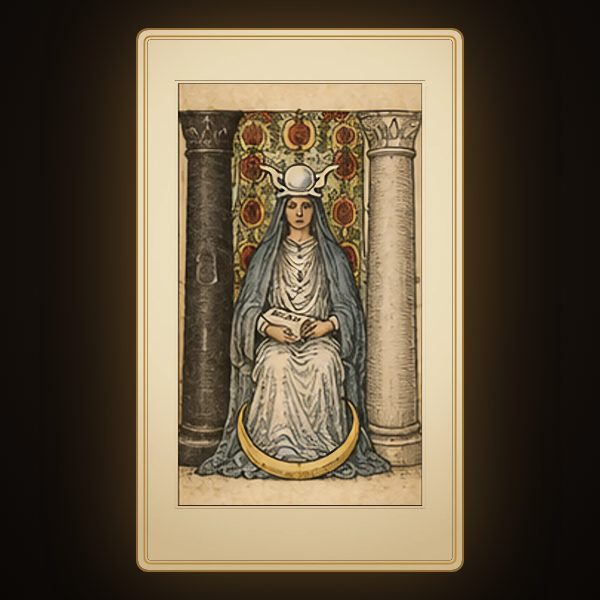
There is also projection. You look at The High Priestess, with her veil and her quiet, and you see what you are carrying: secrets, intuition, a person you cannot read. Someone else sees a stern woman guarding a door. The card is the same; the meaning arrives from you.
None of this makes tarot useless. It makes it a mirror rather than a window. A mirror is a useful object, provided you remember what it is. Trouble starts when people forget and start treating the reflection as information about the outside world, or about another person's mind.
What tarot cannot do
It cannot tell you whether someone loves you, whether you will get the job, or when anything will happen. It cannot see your health, diagnose anything or tell you how a medical condition will go. It cannot judge a legal case or an investment. It cannot predict a death; if a reading ever suggests that, the reading is wrong, and the reader is overreaching. Death in the deck is a card about endings and change, not a prophecy.
It also cannot decide things for you. If you have been asking the cards the same question for a month, the cards are not the problem. A decision is a decision, and tarot cannot take it off your hands.
If any reader tells you that you are cursed, that something terrible is coming, or that you must pay to avoid disaster, leave. Real tarot practice has none of that in it.
How to use it responsibly
Ask open questions, particularly about yourself: "What am I not seeing here?" works better than "What will happen?" Treat what the cards suggest as a hypothesis to test against your own experience, and drop it if it does not fit.
Avoid using it to answer questions that belong to professionals. Do not use a reading to decide on treatment, to settle a legal question or to make a major financial commitment. Do not ask about whether another person is safe or lying. Tarot is for entertainment and self-reflection, and that description is accurate rather than modest.
Keep your agency. A good habit is to end every reading by writing what you decide to do, in your own words, rather than what the cards said. That sentence is yours.
At TheMyths' Mystic's Table the crone is quite upfront about this; she will read the cards and then ask what you think, which is more or less what any decent reader does.
When to talk to a real professional instead
Reflection has limits. If you are in persistent distress, anxious or low most days, grieving in a way that will not lift, or having thoughts of harming yourself, a therapist or doctor is the right person, and tarot is a poor stand-in. In an emergency, contact your local emergency number or crisis line.
The same goes for practical matters. A lawyer is the right person for a legal worry, a doctor for a symptom, a financial adviser for money, and a trusted friend or counselor for a relationship that feels unsafe.
Tarot can sit alongside those things, as a quiet way of getting your thoughts in order before the appointment. It should never replace them. Used like that, as a mirror, a prompt and a bit of structure, it is a real tool, and an honest one.
Cards in this guide
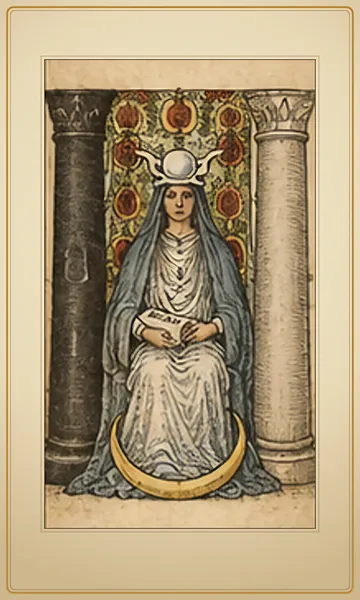 The High Priestess
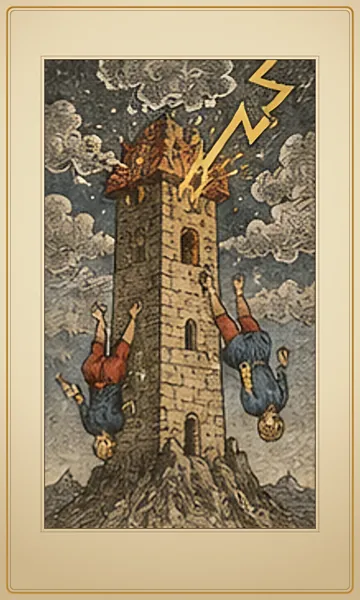 The Tower
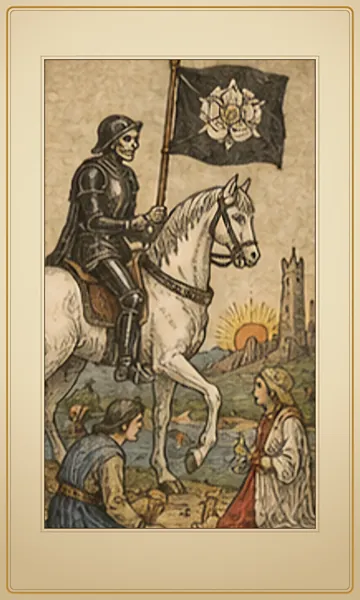 Death
Questions people ask
Is tarot scientifically proven?
No. There is no reliable evidence that tarot predicts the future. What it offers is a structured way to reflect, with the images acting as prompts for your own thinking. That is a useful practice, but it is not a forecast.
Why do tarot readings feel so accurate?
Partly because the meanings are broad and we naturally find personal relevance in general statements, and partly because we project our own concerns onto the images. A reading can feel accurate because it helps you notice something true about yourself.
Can I use tarot to make big decisions?
Use it to think, not to decide. It can help you clarify what you want and what worries you, but major choices about health, law, money or relationships deserve real information and, where relevant, a qualified professional.