
Minor Arcana Meanings by Number: Ace to Ten in Every Suit
Fifty-six Minor Arcana cards sounds like a lot to learn, until you notice that there are really ten numbers repeated four times. Each number carries a stage of a story, and each suit tells that stage in its own language. Learn the stages first and the individual cards start to explain themselves.
Why the number does half the work
Every suit of the Minor Arcana runs from Ace to Ten, and in every suit the same arc plays out: something begins, meets a choice, grows, is secured, is challenged, recovers, is tested, is worked on, nearly finishes and then completes, often with too much of a good thing. The suit tells you which part of life the story is about. Wands are drive, Cups are feeling, Swords are thought and conflict, and Pentacles are work, money and the body.
So when a card you do not know appears, you already have two clues. Take the Seven of Swords. The number seven is about assessing and defending, and Swords are about the mind and what is said or kept silent. Even before you check a book, you can guess at a card about strategy, hidden moves and what is being protected. The picture then confirms the guess: a figure tiptoeing away with an armful of blades.
Treat the number meanings below as a starting grammar rather than a rule. They describe a typical stage, and each card in the deck is also a specific picture that can overrule the pattern.
Ace and Two: the seed and the choice
The Ace is the seed. It is a pure offer of the suit's energy before anyone has done anything with it, which is why it often feels like a gift or an opening. The Ace of Wands is a spark of inspiration, the Ace of Cups a fresh feeling, the Ace of Swords a moment of clarity and the Ace of Pentacles a concrete opportunity such as a job, a course or a bit of income. An Ace says that the possibility exists, not that it will be taken up.
The Two is balance and choice. The seed has met the world, and now there are two of something: two options, two people, two forces. The Two of Wands is planning from a position of strength, holding the globe and deciding where to go. The Two of Cups is mutual attraction, two people meeting at eye level. The Two of Swords is a stalemate, with a blindfolded figure refusing to choose. The Two of Pentacles is juggling, keeping two priorities in motion with a looped ribbon of balance.
Notice that the Two can be a good balance or a frozen one. The question the number asks is simple: what is being weighed, and who is doing the weighing?
Three and Four: growth, then a pause
The Three is growth and collaboration. A single seed becomes something that needs other people or more space. The Three of Wands looks out to sea at ships coming in, expansion in action. The Three of Cups is friends raising their glasses, joy shared. The Three of Pentacles is a craftsperson and two clients or colleagues discussing a plan, collaboration at work. The Three of Swords stands apart: the number promises growth, but in Swords it is the growth of pain, a heart pierced by three blades. The picture is a reminder that growth is not always pleasant.
The Four is pause and structure. After the rush of the Three, something is secured, rested or held. The Four of Wands is a celebration under a canopy, a milestone with people. The Four of Cups is boredom, a figure ignoring a cup offered from a cloud. The Four of Swords is a knight lying in rest, the pause between battles. The Four of Pentacles is clutching what you have, a person holding coins with hands, head and feet.
A Four always raises a second question about whether the stillness is rest or stagnation. In Cups and Pentacles the stillness more often tips into stagnation, as boredom or clutching. In Swords and Wands it more often reads as earned rest or a celebration.
Five and Six: conflict, then ease
Five is the disruption number. It sits at the middle of the arc and almost always carries friction, loss or a challenge to the structure of the Four. The Five of Wands is a free-for-all of competing egos. The Five of Cups is grief, mourning spilled cups and overlooking the ones still standing. The Five of Swords is the hollow victory, an argument won at a cost to relationships. The Five of Pentacles is hardship, two figures trudging through snow past a lit window.
Six is the recovery. The worst has passed and something eases, usually through exchange or movement. The Six of Wands is a public win. The Six of Cups is a gentle exchange with the past, childhood and old friends. The Six of Swords is a quiet crossing out of troubled water. The Six of Pentacles is giving and receiving, with money or help changing hands.
Together the Five and Six describe a pattern worth remembering. Trouble comes, and with it comes a way through. If you see a Six right after a Five in a spread, look for the point at which things start to move toward ease, and if there is a Five with no Six nearby, ask what kind of recovery or help is missing.
Seven and Eight: assessment, then effort
The Seven is the pause to reassess. You have come through the conflict and recovery, and now you look at what you have and what threatens it. The Seven of Wands defends a hilltop against challengers. The Seven of Cups faces a cloud of fantasies and has to choose which ones are real. The Seven of Swords is strategy, perhaps cleverness, perhaps deceit. The Seven of Pentacles leans on a hoe and looks at a plant that is growing but not ready.
The Eight is movement and effort. Having assessed, you now act. The Eight of Wands is speed, with wands flying through open sky. The Eight of Cups is a figure walking away at night from stacked cups, choosing to leave something that no longer satisfies. The Eight of Swords is a bound and blindfolded figure, effort turned inward into a trap of thoughts. The Eight of Pentacles is the apprentice at the bench, repeating a task until it is mastered.
Between them, Seven and Eight ask how you handle the uncertain middle of any long project. Do you defend, daydream, scheme or wait? And after that, do you run, leave, freeze or practice? Reading them side by side often shows a habit.
Nine and Ten: nearly there, and then full
The Nine is near completion. You are close enough to feel the end and tired enough to feel the road. The Nine of Wands is a bandaged figure still guarding the fence, weary but standing. The Nine of Cups is the wish card, a contented person with cups on a shelf behind. The Nine of Swords is the three a.m. mind, awake and in anguish over worries. The Nine of Pentacles is a woman in a garden she has made, secure and independent.
The Ten is fullness, and often excess. Whatever the suit stands for, the Ten is the point at which there is a lot of it. The Ten of Wands is a person bent under a bundle of staves, the burden of too much. The Ten of Cups is a family under a rainbow, emotional fulfillment. The Ten of Swords is a figure face down with ten blades in his back, and a dawn on the horizon: the bottom, which also means the end of the fall. The Ten of Pentacles is an old man with family and dogs, wealth and legacy that reach beyond one lifetime.
The Ten is also a doorway. The arc is a circle, and the Ten of any suit is a few steps from the next Ace.
The Five of Cups and the Five of Wands: same number, different world
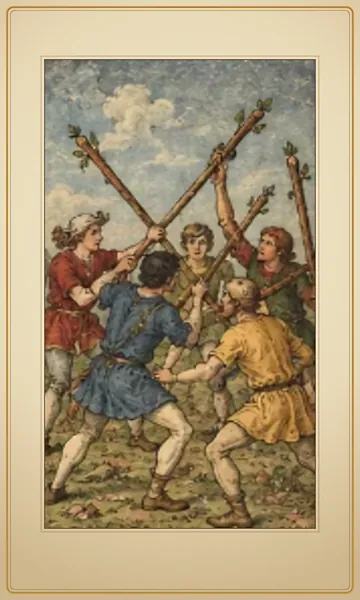
A good way to see how suits color a number is to put two cards of the same rank next to each other. Both Fives are about trouble. In the Five of Wands, five people hold staves and swing them in a scuffle with no clear winner. It is loud and public and often more about energy than harm. Competition can sharpen you or wear you out, and the card asks whether this noise is productive.
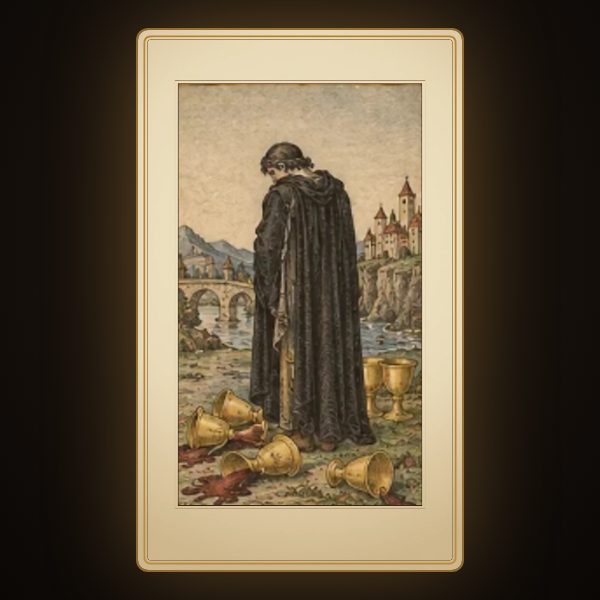
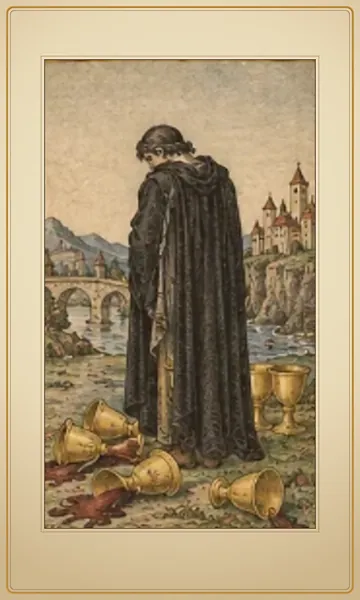
In the Five of Cups, a figure in a dark cloak stands with their back to two upright cups, staring at three spilled ones. It is silent and private. The trouble is grief or regret, and the card asks where attention is going, not who is winning.
Same number, same message about disruption, yet the advice differs. For the Five of Wands: pick your fights, listen, and see if the clashing could become a shared plan. For the Five of Cups: allow the sadness, then notice what you still have, and when you are ready, turn around. The Five of Swords and Five of Pentacles do the same trick in their own dialects, a cold argument and a cold winter.
Using numbers in a reading
In a spread, glance at the numbers before you read any picture. Many cards of a single number is a strong signal. Several Fives suggest a time of upheaval and friction. Several Sixes suggest a settling and an exchange. Several Tens suggest that something has reached a limit, for good or ill. A spread of Aces suggests a lot of new beginnings at once, and it may be worth asking whether you can handle them all.
Watch the sequence too. A Four followed by a Five often reads as a comfortable structure being challenged. A Nine followed by a Ten says that the end is near, and the question becomes what it will cost. Moving from a Seven to an Eight reads as moving from thinking to doing.
Keep the picture as your tie-breaker. The number gives you the stage and the suit gives you the territory, but the artwork on this specific card tells you what it looks like in a life. Between the three you will rarely be lost.
Cards in this guide
 Five of Cups
 Five of Wands
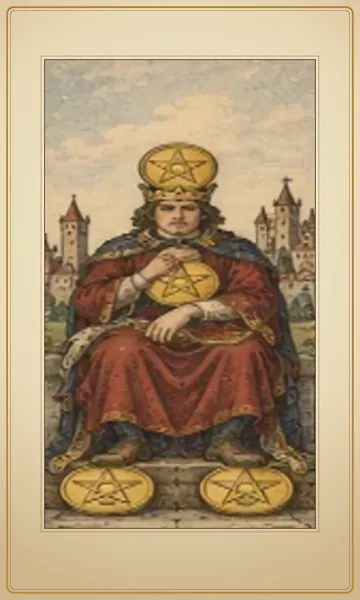 Four of Pentacles
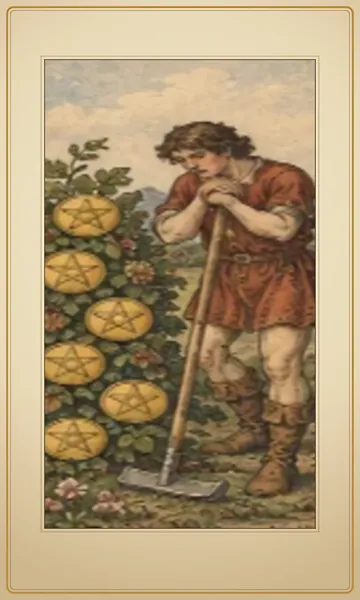 Seven of Pentacles
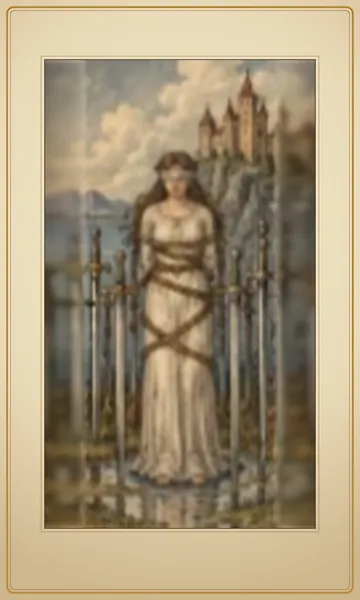 Eight of Swords
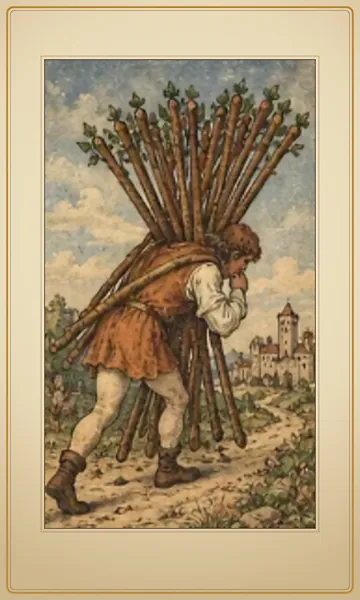 Ten of Wands
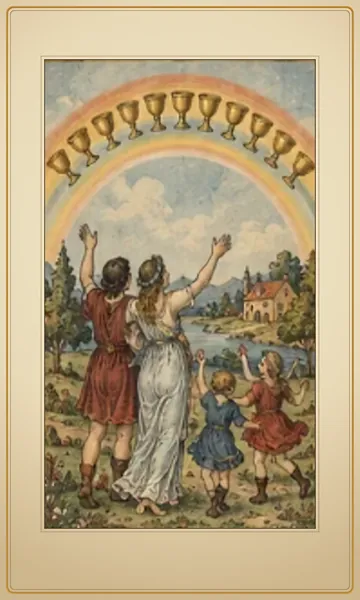 Ten of Cups
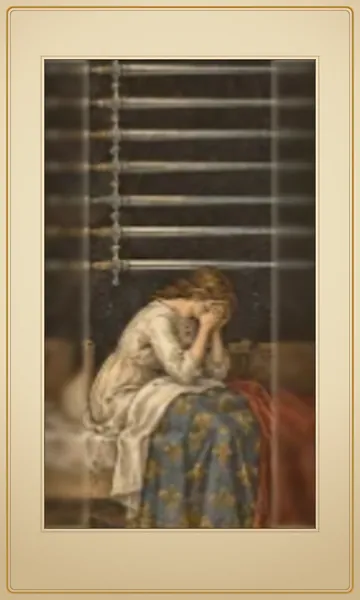 Nine of Swords
Questions people ask
Do all four suits have the same number meanings?
The stage is the same, and the suit changes how it looks. A Five is always about disruption, but it is a brawl in Wands, grief in Cups, a hollow win in Swords and hardship in Pentacles. Knowing the stage gives you a head start on any card in the suit.
What does it mean when several cards of the same number appear?
It points to a shared theme. Several Fives suggest conflict or change, several Sixes suggest exchange and ease, several Tens suggest that something has reached its limit. Use it as a signal to read the spread through that number, rather than as a prediction.
Is the Ten always a happy ending?
Not always. The Ten is fullness, which can mean fulfillment, as in the Ten of Cups, or too much, as in the Ten of Wands. The Ten of Swords is a painful ending but also shows a dawn. Look at the picture and the suit before you decide.
Should I learn numbers or card pictures first?
Learn both at once, starting with the numbers because they cover the whole deck. Take a card, name its stage and its suit, then look at the picture and see how the two combine. In a few weeks most of the Minor Arcana will feel familiar.