Swords Tarot Cards: Meanings, Story and Court Cards
Swords are the air of the tarot: thought, language, truth and the conflicts that come with them. The suit has a reputation for being the dark one, but it is also where clarity lives. Here is what the suit stands for, the story from Ace to Ten and how to read the sharper cards without flinching.
What the suit of Swords stands for
Swords belong to the element of air. Air is mind: ideas, communication, judgment, decisions and the stories we tell ourselves. The suit covers everything that happens between your ears and between your mouth and someone else's ears, such as arguments, plans, worries, truths and boundaries.
The pictures are cooler in color than the other suits. Skies are gray or stormy, water is choppy and the figures are often alone. That is not a promise of doom, only a recognition that thinking and saying hard things can be uncomfortable. A sword has two edges, and the suit is honest about it: a clear mind can cut through confusion, and a sharp tongue can wound.
At its best, Swords give you honesty, fairness, fresh perspective and the courage to name the thing. At its worst they give you overthinking, harshness, rumination and a story about yourself that is crueler than the facts. The suit asks which kind of thinking you are doing.
The story of the Swords from Ace to Ten
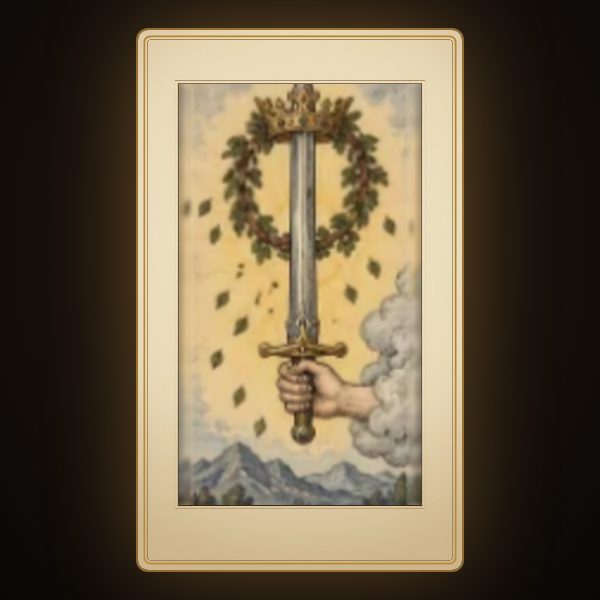
The Ace of Swords is the moment the fog lifts: a clear, cutting truth. The Two of Swords is a stalemate, a blindfolded figure holding two blades in balance and refusing to choose. The Three of Swords is heartbreak said plainly, a heart pierced under rain. The Four of Swords is the pause: a figure resting on a tomb while the mind recovers.
The Five of Swords is a hollow victory, an argument won at the cost of the people around you. The Six of Swords is the quiet crossing out of troubled water toward a calmer shore. The Seven of Swords is a clever escape or a theft, strategy that shades into secrecy. The Eight of Swords is the trap of thoughts, a bound and blindfolded figure with the way out closer than it seems.
The Nine of Swords is the three a.m. mind, awake with worry. The Ten of Swords is rock bottom, a figure face down under ten blades, and yet the sky behind is lightening. The arc is honest about how much of our suffering is made of thought, and equally honest that the thoughts can change.
The Swords court cards
The Page of Swords is watchful curiosity: a quick mind at the start of learning, asking questions and noticing what others miss. The Knight of Swords is the mind at full gallop, who charges in sword first with an idea. He is decisive and focused and can run over people on the way. He can describe a person who speaks bluntly and acts fast, or a part of you that wants to fire off the message now.
The Queen of Swords is clear sight and clean boundaries. She has lived enough to spot pretense and prefers honest words to comfortable ones, and she is fair rather than cruel. The King of Swords is reason with authority, a person of principle who decides and takes responsibility for the decision. His risk is coldness, and being so rational that he forgets the people involved.
In shadow, Swords courts can become sarcastic, controlling or cutting. Whether they describe someone around you, a part of you or a way to approach the problem, read them for style, not for gender or age.
Swords in love, work and money
In love, Swords are about communication. The Two of Swords asks which hard conversation you are avoiding. The Three names heartbreak, the Five an argument that has gone too far, the Six a move toward calmer water, and the Queen a clear boundary. The suit often asks what truth is waiting to be said and whether you will say it with care. Be wary of using Swords cards to decide what a partner thinks. They show the tone of the thinking in the situation, not another person's mind.
At work, Swords describe decisions, contracts, emails, meetings, deadlines and office politics. The Ace is a breakthrough in understanding, the Eight is a feeling of being stuck, and the King is a boss who values fairness and rules. The Nine and Ten ask about stress and exhaustion, and for those, rest and a conversation with someone who can help matter more than any spread.
With money, Swords are the planning, calculating and worrying side. They suggest looking at the figures squarely. For any real financial decision, consult a qualified professional.
When many Swords appear, or the suit is reversed
A spread heavy with Swords is a spread of thought and conflict. It can describe a period of intense decision-making, difficult conversations or a busy, anxious mind. If the Swords outnumber everything else, ask whether you are thinking your way around something you need to feel or do. It may also be useful to ask which sword is the sharpest and what it is trying to cut.
Reversed Swords often show thinking that is turned inward or stuck: unspoken words, circling worries, or a truth that has been delayed. The Ten of Swords reversed can mean the worst is behind you, or that you are holding on to an ending that is already over. If your mind is racing and you cannot rest, or if you have thoughts of harming yourself, speak to a doctor, a counselor or a crisis line without waiting.
Common misreadings of Swords
The Three of Swords does not predict a breakup. It says that a hurt is present and needs acknowledging. The Ten of Swords is not a death card; it is the bottom of a hard stretch, and the dawn on its horizon matters. The Seven of Swords is not always a thief, since it can also mean careful strategy or acting alone. The Five of Swords does not mean you should lose an argument, only that winning at any cost has a price. The Eight of Swords does not mean you are stuck for good, because the bindings are loose.
Finally, the Swords are not bad cards. They are the ones that tell the truth, and truth is rarely comfortable. If a Swords card makes you wince, it is often the most useful card on the table.
Every card of the Swords
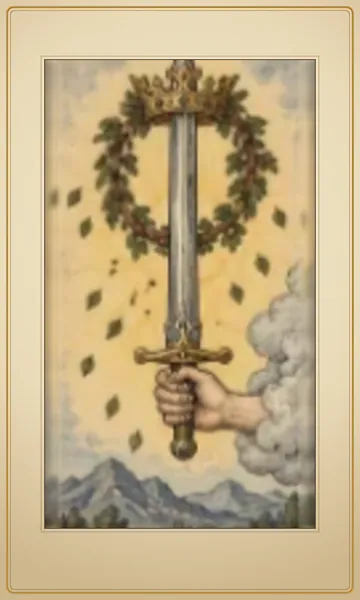 Ace of Swordsa clear, cutting truth
 Two of Swordsa stalemate you're avoiding
 Three of Swordsheartbreak
 Four of Swordsrest before the next fight
 Five of Swordsa hollow victory
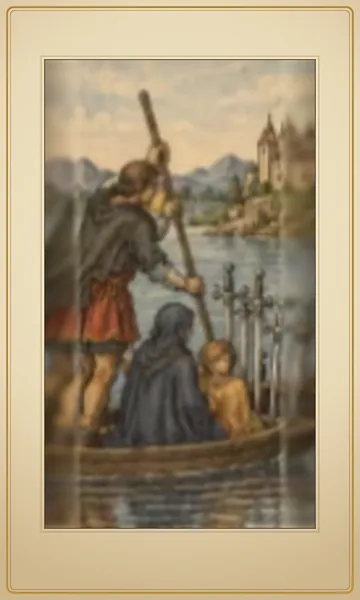 Six of Swordsleaving troubled water
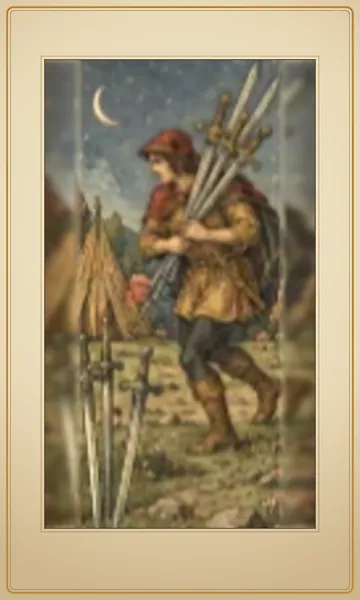 Seven of Swordsa clever escape, or a theft
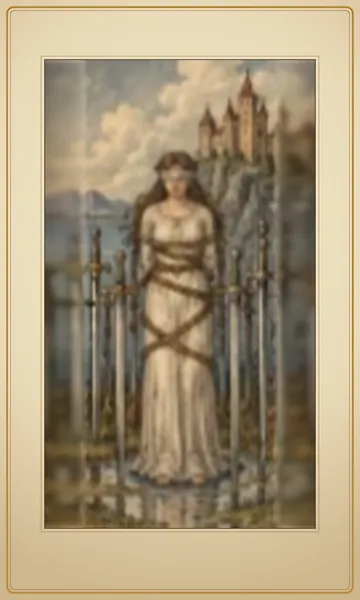 Eight of Swordsa trap mostly of your own making
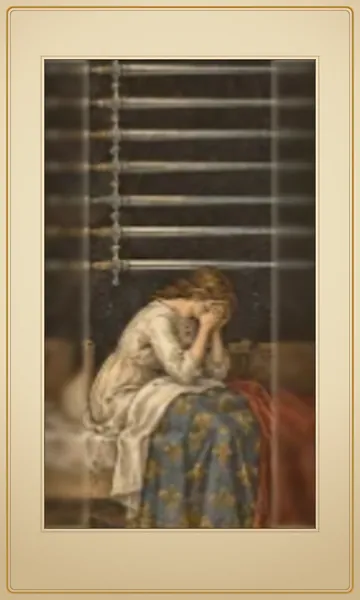 Nine of Swordsthe three a.m. worries
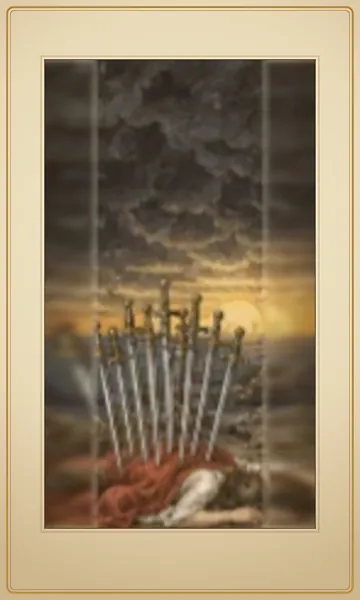 Ten of Swordsrock bottom; it ends here
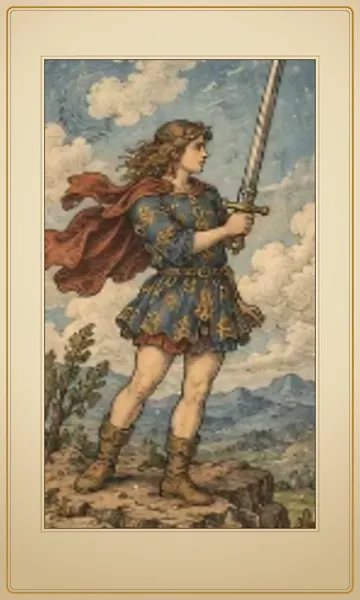 Page of Swordswatchful curiosity
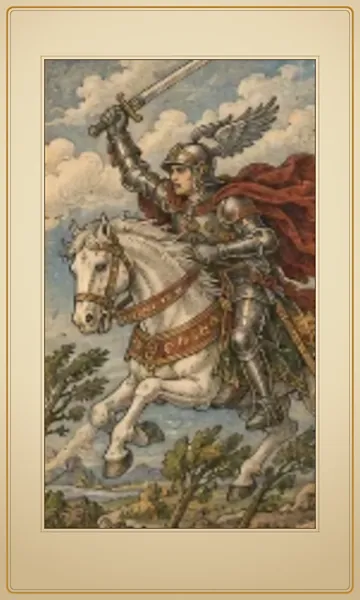 Knight of Swordscharging in, sword first
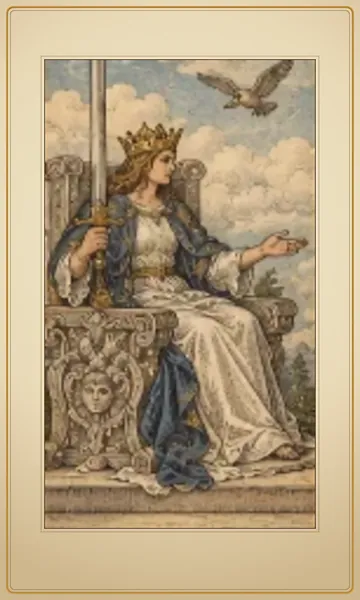 Queen of Swordsclear sight, clean boundaries
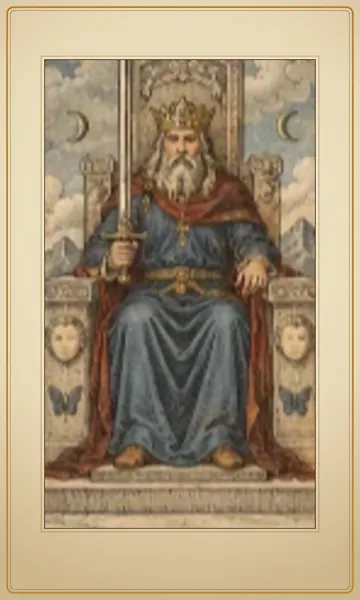 King of Swordsreason with authority
Questions people ask
What do Swords mean in tarot?
Swords are the suit of air, representing thought, communication, truth, decisions and conflict. They show how you think and speak, and what happens when ideas meet reality.
Are Swords bad cards?
No. They include difficult pictures, but they are really honest ones. Swords name worry, loss and conflict so you can deal with them, and the Ace, Queen and King show clarity and fair judgment.
What does the Three of Swords mean?
It shows heartbreak, grief or a painful truth. It does not predict a breakup. It says that a hurt is real and deserves to be acknowledged before anything else can happen.
What does a reading full of Swords mean?
It suggests the question is dominated by thinking, communication or conflict. Ask whether you are overthinking something that needs action or feeling, and what conversation might clear the air.